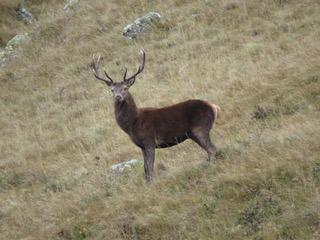
Over the last six months the NZ Game Animal Council (GAC) has been engaging with Minister Hoggard, Minister Meager, and directly with the Ministry for Primary Industries (MPI), about the need for meaningful hunter involvement in any national wild deer management planning.
Today, the Government has announced a pilot project for wild deer management on private land.
“Hunters will be represented by the GAC and New Zealand Deerstalkers Association (NZDA) on an oversight group as part of this project,” GAC CE Corina Jordan says.
Starting in two catchments, the project will see the development and delivery of wild deer management plans.
“The GAC is pleased to see work progressing at a national level that supports hunter involvement in deer management, and the role of hunters, as wild deer managers, recognised,” Corina says.
The GAC has legal functions, enabled through the Game Animal Council Act 2013, and will be operating under these functions to:
-
Advise and make recommendations to the Minister.
-
Raise awareness of the views of the hunting sector.
-
Liaise with others to improve hunting opportunities.
-
Advise private landowners on hunting.
“In addition to its role on the oversight group, the GAC is developing initiatives to provide practical game animal management advice to landholders, better connect recreational hunters with landholders experiencing pressure from game animal populations, and expand opportunities for wild game meat to be donated by everyday hunters to food banks and community organisations.
“Together, these tools will enable more collaboration between landholders and hunters, while protecting the future of wild game meat donations and growing the overall volume of high-quality protein getting to foodbanks and families in need,” Corina says.
These tools are currently undergoing testing and following engagement with the sector, the GAC aims to make them publicly available later this year.
“We understand the learnings from the governments pilot project will inform potential management approaches for other areas and we look forward to ensuring that hunters remain a key part of these future solutions,” Corina says.
“The GAC has been establishing a number of connections within the agricultural sector that will significantly support a collaborative and constructive relationship between farmers and hunters,” she says.
The GAC will be meeting with MPI and NZDA later this month to discuss next steps.
Read the Government’s statement here: Government pilots wild deer control programme | Beehive.govt.nz

The real opportunity here is rebuilding trust between landholders and hunters. That only works if the programme values collaboration, minimises waste, and treats hunters as managers rather than a convenient labour force. Done right, this could be a model. Done poorly, it won’t last.
Hunters are being invited into this process, which is positive - but they’ll also carry the blame if it fails. That makes transparency critical: clear targets, clear methods, and clear answers on whether hunting is being prioritised over poisoning.
If this pilot is genuinely about outcomes, it needs clarity on the role of poison-based control agencies. Organisations whose funding depends on aerial poisoning have a structural conflict with hunter-led management. Without resolving that tension, this risks becoming symbolic rather than effective.
Any serious deer management programme must avoid waste. That means enough skilled hunters, clear recovery expectations, and practical pathways for meat use or donation. Population control that ignores carcass recovery isn’t management - it’s just displacement of the problem.
One obvious question: where is DOC in all this? Deer don’t stop at fence lines, and it’s hard to see how private-land management succeeds if public land policy remains fundamentally hostile to hunting. The disconnect needs addressing sooner rather than later.
Encouraging to see hunters recognised as part of the solution. A key test will be whether animals taken under this programme are expected to be fit for consumption. Poisoning undermines food recovery, ethics, and public support. If deer are killed but left to rot, this risks losing social licence very quickly.