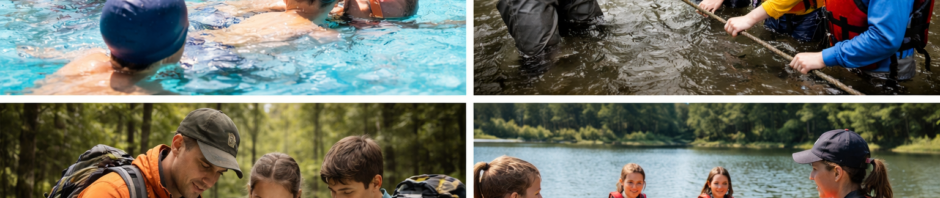
A recent Stuff article here highlights a campaign to teach 10,000 children safe swimming and water-survival skills over summer. It’s a positive story. Few would argue against the value of children learning how to float, cope with cold water, or signal for help. Lives are saved by those skills.
But for CORANZ, the more interesting question sits just behind the headline.
Why is such a campaign needed at all?
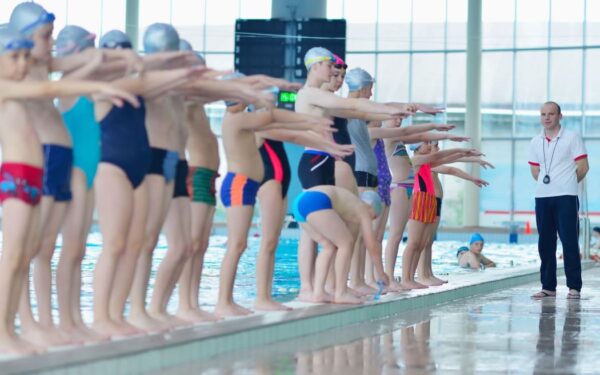
Not long ago, swimming was something most children learned as a matter of course. It wasn’t exceptional, charitable, or campaign-driven. It was simply part of growing up in a country surrounded by water. Rivers, beaches, lakes and harbours were everyday environments, and competence around them was quietly assumed.
That assumption has clearly gone.
If tens of thousands of children now reach adolescence without basic water skills, what does that say about how outdoor competence is being formed - or not formed - more generally?
Swimming is not just an activity in its own right. It underpins a wide range of outdoor recreation. Snorkelling. Paddling. Boating. Fishing from rocks or beaches. River swimming on hot days. Even something as simple as confidence around tidal estuaries or sudden depth changes depends on water competence.
When that competence is missing, participation narrows.
Do people avoid the water altogether?
Do families choose safer, more controlled environments?
Do councils respond by restricting access rather than building skill?
The answers matter, because swimming is often the first point where a broader pattern becomes visible.
The article quite rightly focuses on survival skills. Floating. Conserving energy. Dealing with shock. These are critical when things go wrong. But survival is the last line of defence, not the first. Long before someone needs to float for their life, they need to decide whether to enter the water at all.
That decision depends on judgement.
How strong is the current?
What is the tide doing?
How cold is the water?
Is this a place I understand, or one I should treat with caution?
Those questions are not answered by survival training alone. They are answered by experience, familiarity, and risk literacy - the ability to read conditions and make choices accordingly.
Is that still being taught?
The campaign described in the article exists largely because swimming instruction is no longer universal. Cost, transport, access to pools, and competing priorities all play a role. As a result, water competence has become unevenly distributed. Some children receive lessons early and often. Others receive none at all.
That inequity has long-term effects on participation.

Children who grow up comfortable in and around water are more likely to engage in water-based activities later in life. Those who don’t often carry that uncertainty into adulthood. Access remains technically open, but practically limited by confidence and skill.
From an Activities perspective, this matters because outdoor recreation is not just about availability of places. It’s about people feeling capable of using them.
The swimming campaign is admirable because it addresses a gap. But it also highlights a shift in how we now treat outdoor competence. What was once assumed is now remediated. What was once built early is now repaired later - if at all.
Is that sustainable?
There is also a question of expectations. When swimming is framed primarily as a safety issue, the conversation tends to end with warnings, rules, and restrictions. When it is framed as an everyday skill, the conversation opens into participation, enjoyment, and confidence.
Which framing do we want to reinforce?

CORANZ has long argued that outdoor activities are safest when people are competent, not merely cautious. Swimming is a clear example. A competent swimmer with good judgement is far less likely to need rescue than someone who knows how to float but lacks confidence reading conditions.
This distinction is important. Safety achieved through competence is different from safety achieved through avoidance.
The article celebrates a campaign. CORANZ can acknowledge that - while also asking the deeper question: what other outdoor skills are now in the same position as swimming?
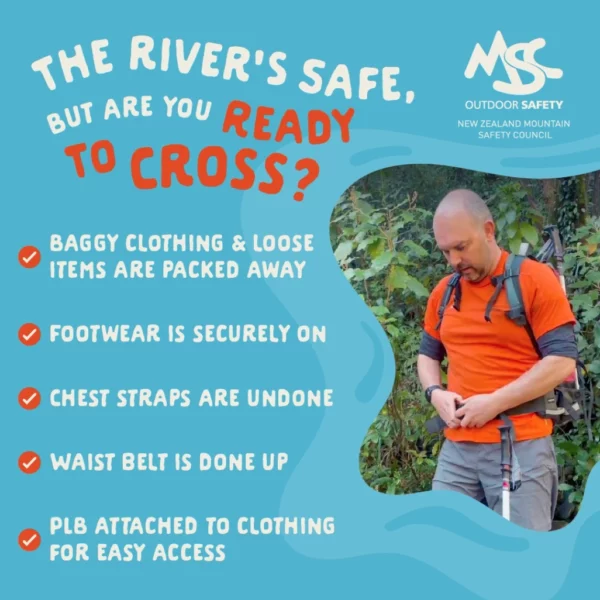
River crossings?
Bush navigation?
Weather awareness?
Basic first aid in remote places?
If these too become “gaps” filled only by targeted programmes or volunteer effort, what does that mean for broad participation in outdoor activities?
Swimming is simply the most visible example because water is unforgiving. But the pattern extends well beyond the beach or pool.
For CORANZ, the takeaway is not that campaigns are bad - they are necessary. The concern is that we increasingly rely on them to compensate for the quiet disappearance of everyday competence.
If outdoor activities are to remain accessible to ordinary New Zealanders, skills need to be treated as foundational, not optional. They need to be valued, supported, and normalised - not rediscovered after a problem becomes visible.
Teaching 10,000 children to swim safely this summer is a good thing.
But the more challenging question remains: how did we reach a point where swimming, in a country like New Zealand, requires a special campaign rather than being an ordinary part of growing up?
Until we are prepared to ask that, we will keep celebrating fixes - while quietly accepting the loss of what once made outdoor participation feel natural, confident, and shared.