
An Election-Year Question for Outdoor New Zealand
Guest Post by Dave Rhodes
One of the more disciplined and effective pieces of advocacy circulating this election year comes from LegaSea (see https://legasea.co.nz/). Whether or not one agrees with every position they take, there is no denying the clarity of their approach.
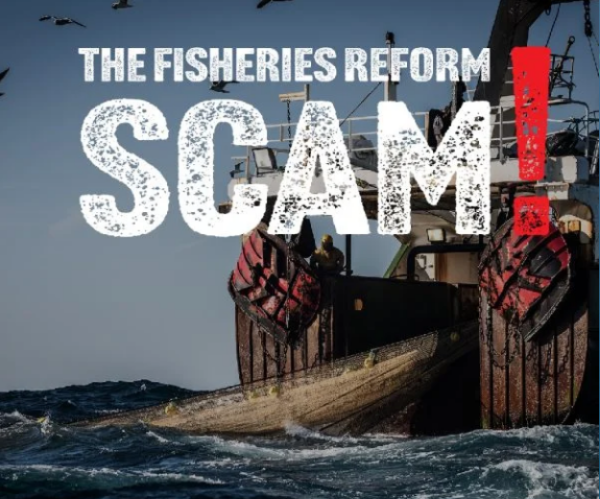
They have identified a concrete policy threat.
They have explained why it matters to everyday New Zealanders.
They have committed to analysing party positions side by side.
And they have made it clear that voting has consequences for shared natural resources.
That kind of focus deserves recognition.
A model worth noting
LegaSea’s messaging is notable not because it is loud, but because it is deliberate. They are not simply reacting to headlines. They are engaging early, naming processes they believe are flawed, and signalling clearly that fisheries management is an election issue - not something to be quietly resolved after votes are counted.
They also manage something that many organisations struggle with: being non-partisan without being neutral. They don’t tell people how to vote, but they insist voters pay attention.
That balance is hard to strike. They strike it well.
A wider question for outdoor recreation
Which raises an obvious question:
Should other outdoor and environmental organisations be doing the same this election year?
Fishing is not the only area where:
- public access is shrinking,
- environmental quality is declining,
- or major policy shifts are occurring with little public scrutiny.
Outdoor recreation communities have seen:
- freshwater standards weakened or contested,
- fast-tracked development override local input,
- access decisions made by agencies remote from users,
- and infrastructure failures that directly affect recreation and food gathering.
Yet much of this arrives piecemeal, often after elections, when the opportunity for democratic influence has already passed.
Who speaks for the rest of the outdoors?
New Zealand has no shortage of organisations representing specific outdoor interests - Fish & Game, New Zealand Federation of Freshwater Anglers (NZFFA), tramping and hunting groups, paddling, access advocates, conservation volunteers.
Some may already be preparing election-year analysis. Some may be choosing to stay out of politics entirely. Others may be quietly lobbying behind the scenes.
The problem is that from the outside, it’s hard to tell.
And in an election year, silence is not neutral. It is simply absence.
The cost of not engaging
When outdoor communities don’t engage early and clearly, policy is shaped elsewhere - often by those with commercial leverage, legal resources, or a narrow focus on productivity.
The result is familiar:
- decisions framed as “technical”,
- consultation compressed or deferred,
- and outcomes that trade long-term environmental health for short-term gain.
By the time impacts are felt - on rivers, coasts, access tracks, or fish stocks - the political window has closed.
LegaSea’s approach recognises that reality. They are acting before the door shuts.
An opportunity for collective clarity
CORANZ represents a broad cross-section of outdoor recreation. That breadth is a strength - but it also creates a responsibility.
Election years offer a rare opportunity to ask simple, unambiguous questions:
- Who owns our natural resources?
- Who benefits from policy change?
- Who bears the cost when things go wrong?
- And who is accountable when access and amenity are lost?
These questions cut across fishing, hunting, freshwater, access, and conservation. They deserve to be asked openly, not buried in technical amendments or coalition negotiations.
Inspired, not instructed
This is not a call for every organisation to copy LegaSea’s tone or tactics. Different mandates require different approaches.
But it is a call to recognise good advocacy when we see it - and to ask whether the wider outdoor sector is doing enough, early enough, and clearly enough to ensure that outdoor values are not an afterthought.
LegaSea has shown one way to do this.
The question now is whether others will step forward - and whether, collectively, the outdoors will be heard before decisions are locked in for another electoral cycle.
That is a question worth asking this year.

Each day produces another threat to outdoor activities. The question is do we need one voice or are politicians more influenced by multiple voices? Everybody needs to make the point (loudly) that we are unhappy with all the environmental, especially freshwater, threats.