
CORANZ commentary
Proposals to impose an instant halt on under-16s’ access to social media are usually framed as common sense. Identify harm, remove exposure, problem solved. It’s a familiar pattern. We see it in outdoor policy all the time: risk is identified, access is removed, and safety is assumed to improve.
But human systems rarely work that cleanly.
One concern that deserves far more attention is withdrawal - not in a sensational sense, but as a real, predictable response when a primary source of connection or coping is removed abruptly. Ignoring that risk doesn’t make it go away. It simply relocates it.
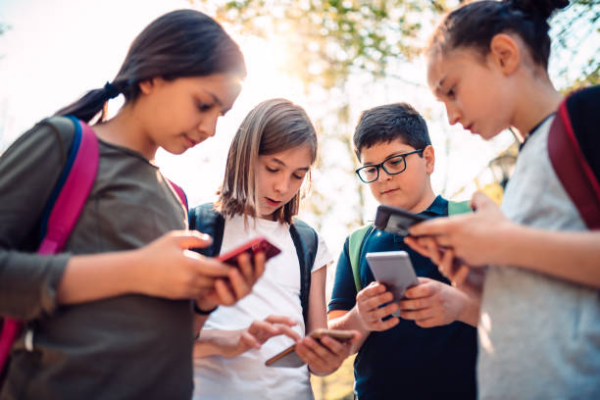
For many young people, phones and social platforms are not just entertainment. They are where friendships live, where peer support happens, where identity is explored, and where isolation is mitigated. Remove that access overnight and some children will adapt easily. Others won’t. A small but important group may experience genuine distress.
What does withdrawal look like in this context? Anxiety, agitation, sleep disruption, irritability, social withdrawal, spikes in loneliness, panic, and a sense of sudden disconnection. None of these are exotic. They are the same responses seen whenever a familiar coping mechanism is abruptly cut off without replacement.
This is not an argument that social media is benign. It clearly isn’t for everyone. It is an argument that abrupt removal carries its own risks, particularly for emotionally vulnerable young people. Any policy that ignores those risks is incomplete.
We already understand this principle elsewhere. We don’t remove medication without tapering. We don’t close a bridge without providing an alternative route. We don’t fence a river without considering displacement. Yet with digital connection, there is a temptation to believe that elimination is inherently safe.
Why?
Part of the answer lies in how risk is framed. When harm is visible and public concern is high, decisive action feels reassuring. A ban is simple to explain. It signals protection. It shifts responsibility away from families and institutions and onto a rule. That can be politically attractive.
But simplicity is not the same as safety.
There is a deeper parallel here with outdoor access. Over time, we have learned that removing exposure does not build competence. It may reduce immediate incidents, but it often creates dependency, fragility, and unintended consequences. People become less capable, not more. When they finally encounter risk again, they are less prepared.
Digital life is no different. If young people are never supported to learn how to manage online spaces - boundaries, time use, social conflict, identity pressure - then the moment access returns, the same problems re-emerge. Sometimes intensified.
This is where the idea of withdrawal matters most. A sudden ban doesn’t just remove harm; it removes practice. It assumes that abstinence teaches resilience. In reality, resilience is usually learned through supported engagement, not enforced absence.
There is also a social equity dimension that rarely gets discussed. For some teenagers, online spaces are supplemental. For others - particularly those who are isolated geographically, socially anxious, neurodivergent, or marginalised - they may be the primary social outlet. An instant ban affects these groups disproportionately.
If policy is blind to that difference, it risks harming those already least resilient.
This is not an argument against limits. It is an argument against instant, blanket limits without transition, support, or alternatives. Gradual reduction, age-graduated access, parental involvement, education around use, and parallel investment in real-world activities all reduce the likelihood of withdrawal effects. Sudden prohibition increases it.
The irony is that outdoor recreation is often held up as the antidote to screen time - and rightly so. Physical activity, shared experiences, time in nature, skill-building and confidence all matter. But outdoor engagement works best when it adds to a young person’s life, not when it is used to replace something that has been forcibly removed.
Substitution without consent is rarely successful.
CORANZ’s interest here is not digital policy per se. It is the recurring pattern: risk is identified, exposure is removed, and consequences are managed later - if at all. We’ve seen this approach narrow access to rivers, tracks, coasts, and activities. We should be cautious about applying the same logic to children’s social worlds.
If a ban proceeds, several questions should be answered honestly:
What support is available for children who struggle with the transition?
How will withdrawal effects be recognised and responded to?
What replaces lost connection for those who rely on it most?
Is there a phased approach, or does the switch simply flip?
Who is responsible when harm arises from removal rather than exposure?
These are not arguments for inaction. They are arguments for careful action.
A policy designed to protect young people should not assume that protection is risk-free. Removing access can create stress just as surely as unmanaged exposure can. The task of governance is to navigate between those risks, not deny one of them exists.
We have learned, often the hard way, that managing risk by subtraction alone rarely produces the outcome we hope for. Whether in the outdoors or online, competence, resilience, and wellbeing are built through supported engagement, not sudden disappearance.
If we are serious about protecting young people, we need to be equally serious about the unintended effects of our solutions. Withdrawal is one of them. Ignoring it would repeat a mistake we already know too well.
It’s already happened in India:
https://www.dailymail.co.uk/news/article-15530607/Pictured-Three-sisters-jumped-deaths-parents-took-away-mobile-phone-sick-girls-obsession-Korea-gaming.html
Very sad, and I bet none of our “Leaders” have thought of such consequences. Three young girls commit suicide rather than lose access to their app. Tragic!
We already see severe harm to youngsters from the effects of social-media bullying. It seems so much easier to bully someone emotionally via text than physically. A diminutive child can anonymously “bully” a giant via the airwaves with impunity and not suffer any consequences.
So how do you prevent the social-media harm without creating a firestorm of equally devastating withdrawal symptoms?
Encouraging kids outdoors as an alternate only really works on fine sunny days – so how else?
I guess I disagree with much of the argument Andi. The “sudden” ban is working in schools. There is hardly a teacher who is not happy about the ban. As an ex-Secondary Principal I was dubious, but it has worked – more attention to the curriculum, more socializing and often more interest in extra curricular sports and the arts. Withdrawal can be salved by outdoor pursuits. We should be tapping into that.
There is no reason why it should not improve things outside of school for the under 16s. The current issues re: bullying are real and devastating. Lets admit that social media platforms are designed around creating addictive behaviours. Capitalism has no moral compass. Tech companies are now the biggest capitalists on the globe.
But isn’t that exactly as the article suggests? Not a swift sudden withdrawal, but a slow steady weaning off social media and into other areas – with bans in schools allowing a phased removal, and yes having very positive effects. Yet the little darlings can still dive onto their phones as soon as the final bell rings. And what of lunch breaks? Are phones permitted then?
We need a way to slowly but inexorably find alternatives for our kids so they do not feel s sudden loss.
Yes - the school ban appears to be working, but that’s because it’s a phased, contextual restriction rather than an instant total ban. Phones are removed during predictable, structured hours, with social connection still available outside school. That distinction matters. It’s very different from abruptly cutting off access altogether.
It would seem that the decision makers are dammed if they do and dammed if they don’t, the intent is to protect the kids.