Part Four of a CORANZ Election Series
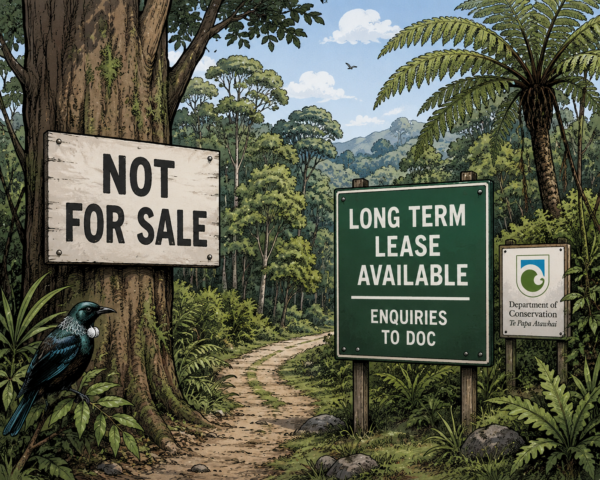
Recent discussion around proposed changes to conservation legislation has drawn strong public reaction, particularly from those who use and value these areas for recreation. Much of that reaction centres on fears of loss - loss of access, loss of protection, and loss of public ownership. The surface narrative is one of potential sell-off or exclusion, but the underlying issue is more precise. The question is how conservation land is to be used, and how those decisions are made.
What changes in the current proposals is not ownership itself, but the framework governing use. Provisions indicate a greater emphasis on enabling activity, including tourism and commercial operations, alongside conservation objectives. Decision-making appears more centralised, with increased ministerial discretion and fewer layers of independent oversight. Consultation processes may also be streamlined in certain cases. Taken together, these shifts adjust the balance between protection, access, and development.
This alters how conservation land functions in practice. Land may remain publicly owned, but its character is shaped by how it is used and who determines that use. Long-term concessions and expanded activity can change patterns of access, even where formal access rights remain. Where decisions are made more centrally, the visibility of those decisions and the opportunity for local input may reduce.
This pattern is consistent with broader changes already observed. Fast-track consenting, adjustments to planning frameworks, and shifts in regulatory oversight all point toward systems that prioritise efficiency and uniformity. Individually, these changes may be justified. Taken together, they influence how public resources are managed and how competing uses are balanced over time.
Conservation land exists for both protection and use. Access, recreation, and stewardship are not separate from conservation, but part of it. That balance depends on clear principles and transparent decision-making. Public resources require management systems that remain accountable and durable, particularly where decisions have long-term effects.
This is not about whether conservation land should be used, or whether activity should occur. It is about how that use is defined, how decisions are made, and how visible those decisions remain. The issue is not ownership alone, but whether the balance between protection, access, and use is maintained over time.