
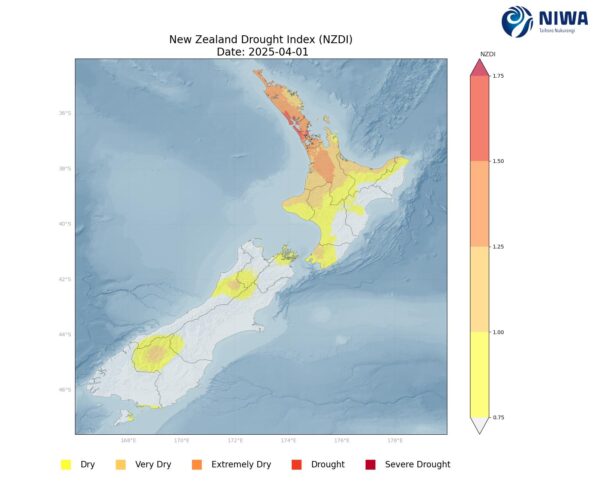
Warnings of an approaching El Niño are becoming more frequent, with forecasts indicating a high likelihood of drier, hotter, and windier conditions across much of New Zealand. The surface narrative is familiar: prepare for drought, increased fire risk, and more variable weather. These cycles are often presented as unusual or concerning, but they are part of a long-established pattern. The underlying issue is not the arrival of El Niño itself, but how the systems it acts upon have changed.
El Niño is a natural climate driver within the Pacific system. It shifts ocean temperatures and wind patterns, influencing rainfall, temperature, and storm behaviour across the region. New Zealand typically experiences reduced rainfall in many areas, increased westerly winds, and greater variability in seasonal conditions. Taken together, these changes alter water availability, soil moisture, and environmental stability over relatively short periods.
What changes now is not the existence of this variability, but the context in which it occurs. Historical records show that the 1877–78 El Niño was one of the most severe on record, contributing to widespread drought and global disruption. That event occurred long before modern environmental pressures or current policy debates. It demonstrates that natural climate variability has always had the capacity to produce extreme outcomes.
The difference lies in system condition. Rivers, catchments, and coastal environments are now operating closer to their limits. Water takes are higher, land use is more intensive, and infrastructure is more exposed to variability. When a dry cycle arrives, the effects are not absorbed in the same way. Reduced rainfall no longer simply lowers river levels; it concentrates contaminants, increases pressure on allocation, and limits ecological resilience.
This pattern is not isolated. Recent discussions around water quality, wastewater capacity, forestry runoff, and public access all point to systems already under strain. Individually, each issue can be explained on its own terms. Taken together, they indicate reduced margin for variability. Seasonal shifts such as El Niño do not create these pressures, but they make them visible.
Environmental management depends on recognising limits before they are exceeded. Natural cycles will continue to operate as they always have. The question is not whether variability occurs, but whether the systems it acts upon retain sufficient capacity to respond without degradation. Public resources such as rivers and coasts require conditions that allow both use and recovery over time.
This is not about the cause of climate patterns or the language used to describe them. It is about how natural variability interacts with systems that are increasingly constrained. The issue is not El Niño itself, but whether the environments it influences are still capable of absorbing its effects.
Climate extremes always have been happening. Hydrologist/botanist Dr Patrick Grant researched the climate cycles in the Ruahine Ranges and identified cyclic stormy periods back to 1530 AD.
As for fear mongering on rising sea levels NZ has been under the sea, then rises and sinks a number of times.
In any case it’s dumb to build on flood plains. Look at Napier. The 1931 earthquake rose the Onekawa/Marewa areas up out of the sea. So what happens; they build extensive housing areas on the upthrusted land. Dumb. Sometime in the future, another earthquake could sink the housing areas down.