
Questions New Zealand Should Be Asking
Guest post by Dave Rhodes
When officials themselves warn Cabinet about the risks of reducing penalties for deepwater fishers, it raises an obvious question: who carries the risk if those warnings are brushed aside? Recent reporting on proposed changes to fisheries penalties suggests the answer may not be the commercial operators seeking relief, but the marine environment - and the public who rely on it for recreation, food, and connection.
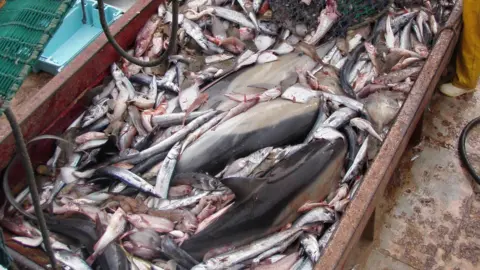
If penalties for catching fish above quota are lowered, what incentive remains to avoid over-catch or minimise bycatch? Deemed values are not abstract accounting tools; they are meant to discourage behaviour that undermines sustainability. If those penalties are softened to reflect industry cost pressures, does the deterrent still work - or does it simply become a fee for fishing on?
What happens to the integrity of the Quota Management System if penalties no longer reflect ecological risk? Officials reportedly warned that reducing deemed values could weaken the system’s credibility. If the system is flexible whenever compliance becomes inconvenient, how does that affect long-term stock health or public confidence in fisheries management?
How should recreational fishers interpret changes that appear to prioritise deepwater operators, when many inshore fisheries are already under pressure? Recreational fishing depends on abundance, not accounting adjustments. If deepwater vessels increasingly encounter inshore species as ocean conditions change, should the response be lower penalties - or stronger incentives to avoid sensitive stocks altogether?
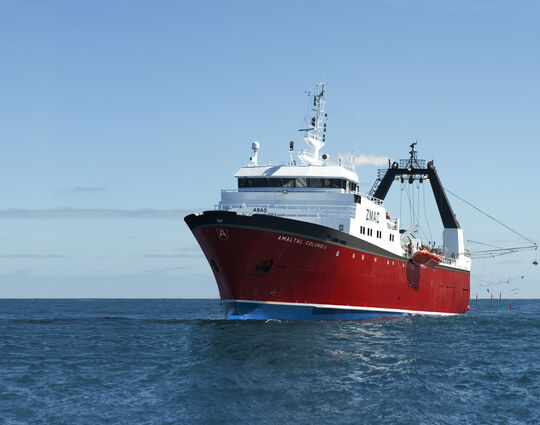
Who benefits if penalties are reduced, and who bears the cost if fish stocks decline? Commercial operators may see immediate relief, but depleted fisheries affect coastal communities, tourism, customary harvest, and everyday recreational access. Is it reasonable that the public absorbs those risks while regulatory settings are adjusted behind closed doors?
What does this signal about the balance between industry convenience and environmental stewardship? Fisheries are a public resource. If rules are altered in ways that appear to favour commercial efficiency over conservation outcomes, how does that square with repeated assurances that sustainability remains the priority?
And finally, why are these questions not being debated openly before changes are made? If officials have flagged risks, should those concerns not be tested through transparent public discussion and select-committee scrutiny rather than resolved internally?
For groups like CORANZ, these are not technical matters. They go directly to whether New Zealand’s moana remain healthy, abundant, and accessible. If penalties are weakened, if safeguards rely on trust rather than enforcement, and if public voices are sidelined, what confidence should New Zealanders have that long-term recreational and environmental values are being protected?
As proposed fisheries reforms move toward Parliament, perhaps the most important question of all is this: will public submissions be genuinely heard - or merely managed - before decisions are locked in?
It’s very hard not to believe Jones is simply repaying his old paymasters. Given all his actions in favour of the fishing industry and against the recreational fisher, he seems as bent as a nine-bob note.
Right there Charlie Boy – Jones would make a corkscrew look straight!
Dave says it all. It is the whaling industry all over again. Blue cod and orange roughy are already in trouble. Inshore fisheries where anglers go are still being ravaged by industry. Lay off our heritage Mr Jones!!!
It’s a feeding frenzy out there for Big Corporate and Big Government. Look at the catch histories of any of our common fish and the evidence is clear. The present commercial fishing industry is unsustainable, as soon as one species is looted to commercial extinction they move on to the next species using bigger boats and the latest technology, and the Quota (Mis) Management System allows them to do it. Big Corporate look after their Political mates, big time and the majority of voters know it. Political change can’t come fast enough.
Corporatism in the form of commercial fishing companies represent the biggest threat to proper sustainable management of the sea fishery. Corporates have immense influence both on politicians and ministry bureaucrats. Money talks, to heck with conservation, the “wise use of the resource.”
Why did the coalition government give Shane Jones the portfolio of Minister of Ocean and Fisheries, in the light of his past strong ties to the commercial industry?
A.I. says “Shane Jones has deep, long-standing connections to the commercial fishing industry, including chairing the Treaty of Waitangi Fisheries Commission (2000–2004) and leading Māori-owned company Sealord. He has received over $66,900 in campaign donations from the Talley’s seafood group, leading to allegations of regulatory capture and policy influence.”
Not my words but AI’s opinion.
Did not one MP in the coalition MPs raise the question?
Jones is bent more than a pigs prick.
What we do or do not do is much more important than our opinions.
Our system of representative government allows us all to participate in and influence the system by which some people gain the authority and power to govern the rest of us.
The small minority of people who do become politically active and influential get to be served by politicians that represent and benefit them at the expense of the rest who prefer to be spectators instead of players of the game.
You might disagree with my comparing our political system to the fictional Game of Thrones production.
but
While Game of Thrones is a fictional, exaggerated, and often darker version of reality, its popularity stems from how it captures the intense, personal, and frequently ruthless nature of modern political competition.
There are two teams in this political game of thrones.
The “right” one is by and for the members if the social, economic and political “upper class” who believe they deserve more wealth and real assets.
The “left” one is by and for the Modern Marxist “intellectual” social justice warriors, who regard their loyal supporters and fans as victims of social and economic injustice imposed on them by the elites of the upper class.
The influential “authorities” of both teams compete in elections for the authority and power to govern the rest of us.
The upper calls elites desire more ownership and control of the wealth created by productive working people and the natural resources and other assets we communally own.
The Modern Marists are more interested in imposing their “religious” ideology on the rest of us than stealing our money and valuable physical assets.
The majority of people, especially the productive “working class”, lose regardless of which team wins the game of thrones we call politics, because they do not participate and gain influence in either of the teams called “right” and “left” political parties.
What we could do to stop being ruled by the “upper class” or Modern Marxists is to join, participate and gain influence in their political parties but that will not happen.
The alternative is to stop supporting and voting for any of the 5 dominant parries and support the other little ones whose influential members and financial supporters might appreciate instead disrespecting the rest of us.
That will not happen either because people always prefer the devils they think they know to new ones they do not think they know.
It does not matter whether the next government is by and for the influential people of the left or right parties because the rest of us are screwed either way.
The real question is how badly and by who we will be less screwed by.
I will stick with the ones of the right, that only want more control of our stuff, instead of the ones of the left that want totalitarian control of our lives and remaining freedoms.
Mr. Luxon might not be the strong and decisive PM we wished for but he is far less dangerous than Mr. Hipkins and his cronies, who are determined to impose their Marxist “religious” ideology on the rest of us by any and all possible means.
Perhaps I am mistaken?
What you choose to do or not do is up to you and not me.
What do you suggest we do or do not?