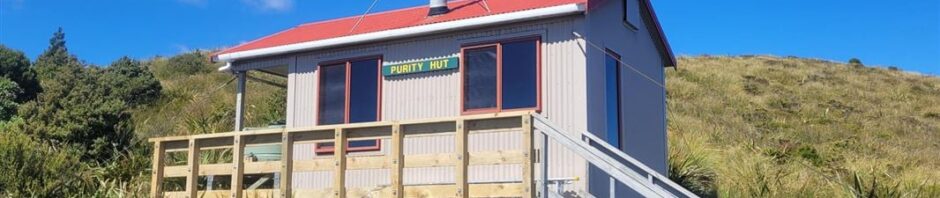
Most backcountry huts managed by Department of Conservation rely on a simple system: rainwater collected from the roof and stored in tanks. It is a practical solution, widely used, low cost, and generally assumed to be safe. For generations of trampers, hunters, and anglers, that assumption has rarely been questioned.
Recent discussion such as here around rural water quality raises a more practical issue. If roof-harvested water in farm tanks can exceed bacterial guidelines, what are recreational users being exposed to in remote huts - particularly those in forested areas where bird and animal activity is constant? The same factors apply: organic debris on roofs, bird droppings, low tank turnover, and minimal treatment before consumption.
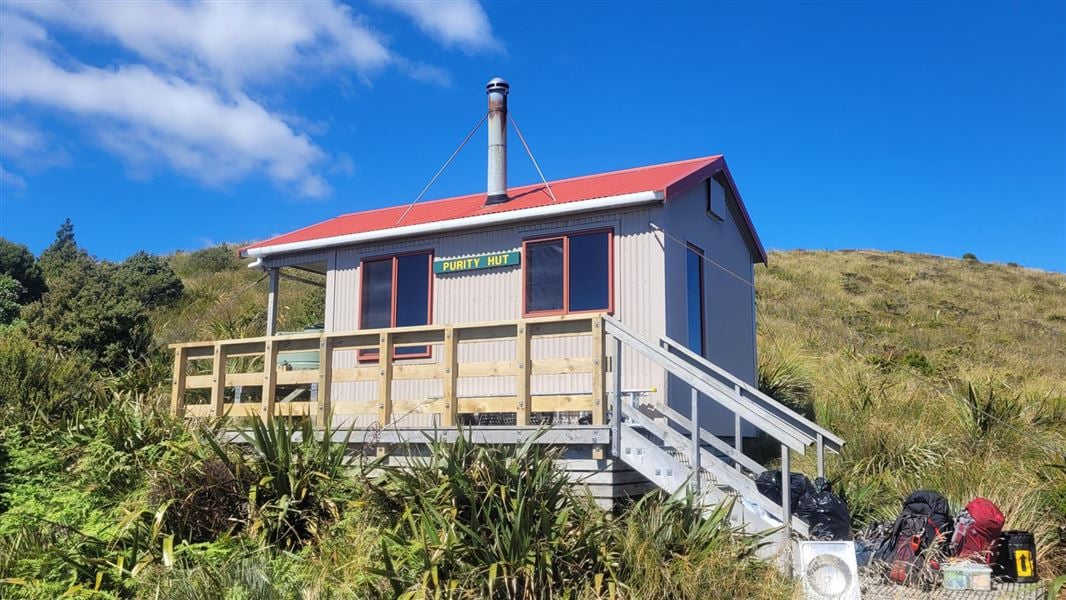
The difference is not the system, but the expectation. In rural homes, many households filter or boil their water. In huts, the assumption is often that the tank provides directly usable supply. In reality, water quality will vary significantly depending on location, maintenance, and recent weather. A hut in open country after heavy rain may provide relatively clean water. A hut under dense canopy, with leaf litter and bird or possum activity on the roof, may not.
The issue is not whether hut water is “safe” or “unsafe” in absolute terms. It is that users rarely assess it at all. Recreational users are, by definition, self-reliant. They carry equipment, manage risk, and adapt to conditions. Water supply should be treated no differently.
The practical steps are straightforward. Boiling remains the most reliable method and requires no additional equipment beyond a cooker. Filtration systems, now lightweight and widely available, provide an additional layer of protection, particularly against bacteria and protozoa. Chemical treatments offer a backup where boiling is not practical. Even simple observation - checking tank clarity, recent rainfall, and surrounding conditions - provides useful cues.
There is a wider point here. Outdoor recreation has always operated on an understanding of shared responsibility. Facilities such as huts provide shelter and access, but they do not remove the need for judgement. Water supply is part of that equation.
The question is not whether DOC should provide fully treated water in every hut. The question is whether users understand the system they are relying on - and act accordingly.
Would anyone trust DoC with anything?