
Or How CORANZ Can Get Its Policies Into Party Manifestos
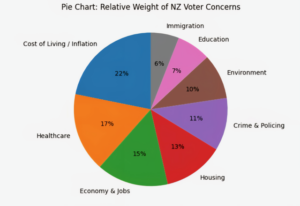
If the charts tell us anything, it is this: outdoor recreation is not a top-of-mind voting issue for most New Zealanders.
Cost of living, health, housing, and economic security dominate. That reality does not make CORANZ irrelevant - but it does define the challenge.The real question is not whether CORANZ should seek political influence, but how it can realistically convert its priorities into party policy in an election year.
For organisations such as Council of Outdoor Recreation Associations of New Zealand, success depends on understanding how parties actually absorb ideas.
What “influence” really looks like
Manifestos are not written by the public. They are assembled by small policy teams under intense electoral pressure. Parties adopt ideas that are:
- low risk,
- broadly defensible,
- compatible with existing narratives,
- and useful across multiple portfolios.
That means CORANZ should not aim first for detailed prescriptions. The most realistic goal is principle adoption: language that embeds outdoor recreation, access, and stewardship as recognised public interests. Once that framing exists, policy detail can follow.
Why parties would listen at all
Parties do not adopt policies because they are morally right; they adopt them because they are politically useful. CORANZ influence increases dramatically when its positions are framed as:
- cost-of-living neutral or positive (free access, low-cost recreation),
- public health enabling (physical and mental wellbeing),
- regional resilience supporting (local economies, volunteer stewardship),
- conflict-reducing (fewer court battles, more community buy-in).
- vote potential (a policy has to attract a significant number of voters)
Outdoor recreation becomes relevant when it solves problems parties already care about.
Framing is everything
CORANZ’s greatest asset is that it sits outside traditional left-right divides. To maintain that advantage, its language must avoid sounding like:
- environmental absolutism, or
- deregulation by stealth.
The most effective framing is pragmatic:
- access as a democratic norm,
- conservation as stewardship, not exclusion,
- regulation as something that must earn legitimacy through fairness and evidence.
Parties are far more likely to adopt wording they can repeat without alienating their base.
Evidence beats passion
Parties distrust anecdote, but they value credible, usable evidence. CORANZ does not need to out-compete government agencies on science whether or not that science is credible. What it can offer - uniquely - is evidence of social consequence:
- access lost,
- participation declining,
- volunteer effort discouraged,
- trust eroding.
Evidence that shows how poor process undermines good intentions is politically powerful because it speaks to risk.
Organisation matters more than moments
Policy influence is not achieved during election campaigns; it is earned between elections. Parties finalise manifestos months in advance, drawing heavily on:
- long-standing relationships,
- policy submissions already on file,
- trusted external voices.
This means CORANZ must be:
- consistent,
- disciplined,
- and represented by a small number of recognised spokespeople.
Diffuse voices dilute influence.
Choosing where to engage
Not all parties are equally receptive, and CORANZ does not need to persuade everyone. Influence grows fastest where:
- MPs represent regional or outdoor-dependent electorates,
- parties are still refining policy rather than defending it,
- internal factions are open to evidence-based moderation.
Early engagement matters far more than public pressure.
Accepting the cost of influence
Political effectiveness comes with risk. Influence may:
- unsettle parts of the membership,
- require compromise,
- or blur ideological comfort zones.
The alternative is purity without impact.
A single well-placed principle in a manifesto can matter more than ten uncompromising demands ignored by all sides.
Measuring success honestly
Success for CORANZ should be measured realistically:
- Does a party acknowledge outdoor recreation as a public good?
- Is access treated as a default, not a concession?
- Are community-based solutions preferred over blanket restrictions?
If the answer shifts from “no” to “sometimes”, influence is already working.
The hard truth
If CORANZ cannot influence manifestos, it will not be because its cause lacks merit. It will be because:
- its framing was too narrow,
- its engagement too reactive,
- or its expectations too pure.
Politics rewards those who show up early, speak clearly, and accept complexity. If CORANZ is prepared to do that, its policies do not need to dominate an election. They only need to outlast one.
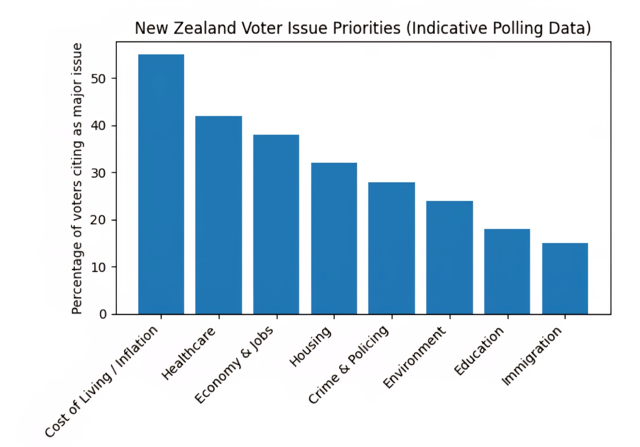
Votes are a politician’s and a political party’s life blood. That’s what matters most and if enough people stand up to be counted, then politicians will adopt it.