Guest Post by Dave Rhodes
The discussion around youth sport often focuses on participation and retention, yet far less attention is given to what follows when young people leave organised structures. As participation narrows through the teenage years, many disengage from formal sport altogether. That outcome is often treated as a loss to be corrected. It may instead reflect a transition that is neither recognised nor supported.
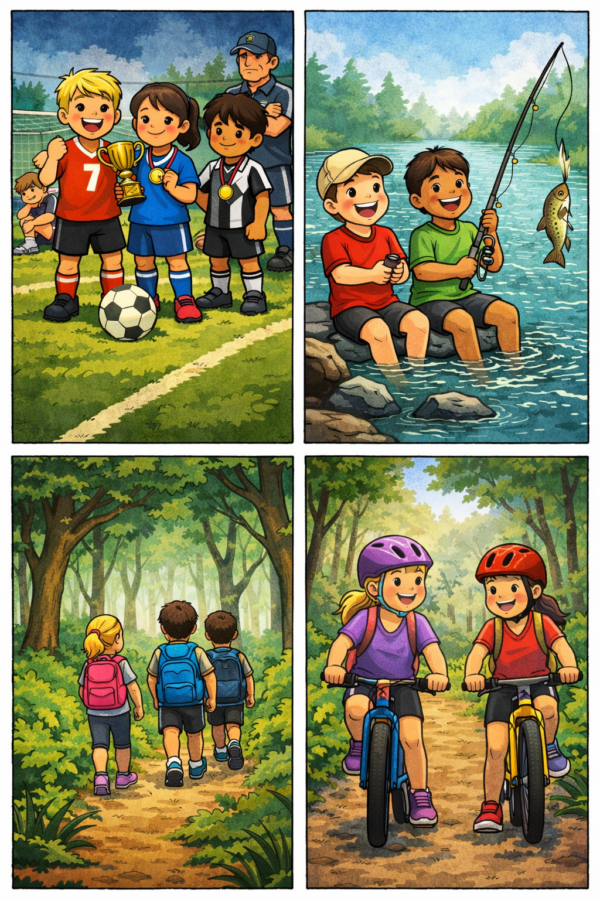
What changes is not simply participation levels, but the nature of activity itself. Organised sport becomes more selective, more structured, and more demanding of time and performance. At the same time, alternatives exist that operate on very different terms: walking, tramping, fishing, paddling, cycling. These activities require no selection, no fixed schedule, and no obligation to perform. Taken together, they offer a continuation of physical engagement, but outside the framework of organised sport.
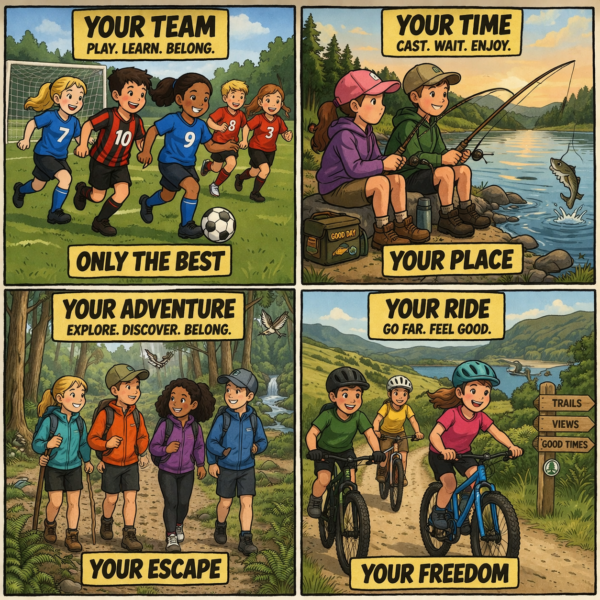
The difficulty lies in access rather than availability. Unlike sport, which is introduced early through schools and clubs, outdoor recreation is rarely presented as a structured pathway. Skills such as navigation, water safety, equipment use, and environmental awareness are often assumed rather than taught. That assumption creates a barrier. Those who have not been exposed early are less likely to transition, even if the form of activity would suit them better.
This creates a gap between two systems that do not connect. One introduces participation but narrows over time. The other sustains participation but requires prior knowledge. The result is predictable: many leave one system without entering the other. This is not a question of motivation, but of continuity.
The pattern is not new. Previous generations often acquired outdoor skills informally through family or community experience. That transmission is less consistent today. At the same time, structured sport has become more formalised, increasing the likelihood of disengagement for those outside competitive pathways. The gap between structured and unstructured activity has widened.
Outdoor recreation sits within a simple principle: participation without selection. It allows continued engagement without the constraints that emerge in organised sport. Public access, basic competence, and confidence underpin that model. Where those are present, participation tends to sustain itself.
This is not about replacing sport. It is about recognising that for many, sport is an entry point rather than a destination. The issue is not whether young people leave organised sport, but whether there is a visible and accessible path for them to continue elsewhere.