
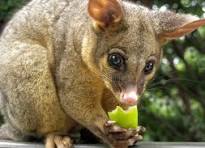
The brushtail possum is not treated like other animals in Aotearoa-New Zealand. Publicly decried, officially poisoned, frequently shot at and intentionally steered towards, the possum is a despised animal.
Indeed, as prior writers on the subject have noted, in order to be a New Zealander, it is almost compulsory to hate the possum (Isern, Potts). Building on that prior descriptive work, this article takes up that hatred of the possum in terms of larger discourses surrounding colonialism and environmentalism in order to make sense of the ideological work of possum-hating.
Beginning with the observation that those who are most committed to animal preservation and protection are those who hate possums the most, I argue that in Aotearoa-New Zealand the possum can be understood as ‘anti-animal’: an animal that needs to be destroyed, not protected in order to conserve nature. Hence, whereas environmental discourse normally foregrounds the protection of animals and natural environments generally, anti-animals represent the inversion of that logic whereby certain animals must be destroyed in order to conserve nature.
The concept of the anti-animal is developed with reference to political theorist Carl Schmitt’s notion of the enemy/foe distinction, where the foe is an enemy who must not be simply defeated, but actively and personally hated and then eventually destroyed.
In the second part of my article, I argue that the possum’s status as anti-animal is a function of its existence at the crossroads of postcolonial and environmental ideologies.
Commonly presented as an invasive and destructive entity, whose existence leads to the destruction of native wildlife, I argue that the possum works to distract from the environmental destruction directly wrought by pākehā colonists in New Zealand.
I thus suggest that possum-hatred acts to resolve the contradiction between the vision of a pristine natural environment that informs New Zealand’s wide range of conservation practices, from species restoration to border security, and the continued existence of the settler state.
The hatred against possums is to be hated and despised too. The possum is a resource to be harvested. The fur is 30 times the value of crossbred wool and the meat makes excellent pet food. See in supermarkets “Possyum” dog roll.
Predator Free NZ, a campaign based on zealotry and an ideology of a phobic hatred of anything introduced is absolute nonsense. Humans are introduced by this criteria, by way of migration.
Predator Free says there were 70 million possums. A Landcare Research scientist called this figure “back of a cigarette packet calculation.”
Predator Free NZ implies they area pest to vegetation but the same scientists said even if there was 70 million possums they’s browse only 15% of the daily foliage production.
Predator Free NZ said they raid birds nests quoting a photo produced by DOC. Poppycock. The photo was exposed as a fake and staged by a Nelson conservationist Ron Eddy.
Besides Landcare studies on the West Coast examined possum stiomachs. No traces of birds, feathers or eggs was found. From memory CORANZ conducted an experiment and found possums didn’t touch the eggs left out.
Possums are herbivores, not predators.
A bit ambiguous in my comment. Ron Eddy exposed the fake nature of the photo.
Hello, I saw the above comments and I’ve read the propaganda war against possums.
Predator Free NZ says “Worse still, possums are the primary wildlife carrier of bovine tuberculosis, threatening New Zealand’s $20-billion dairy and beef industries.”
“Poppycock” as Ferg McDonald said about possums being a predator of birds.
It is poppycock that possums are the primary wildlife carrier of Tb.
In parliament Agriculture minister in 2016 Nathan Guy answered a question in Parliament and said 9830 possums were autopsied for Tb. Not one – zero – had Tb.
The primary cause of Tb spread is the very error prone skin Tb test used on stock.
This results in animals going undetected and they remain in the herd to infect other stock.
In addition there have been farmers transporting stock in from Tb infected areas with Tb outbreaks occurring.
In an oft-repeated case, the stock were brought in from two Tb areas, outbreaks on neighbouring farms occurred. So OSPRI and DOC collaborated and blamed possums and 1080 poison was dropped on the Richmond Ranges adjoining the farms.
In another case near Wairoa, a corporate deer farmer brought in stock from a Tb area (King Country I seem to recall) and Tb broke out in Wairoa.
In both cases the offending farmers were not prosecuted. But possums were and given a death sentence with 1080.
.