Guest Post by Dave Rhodes
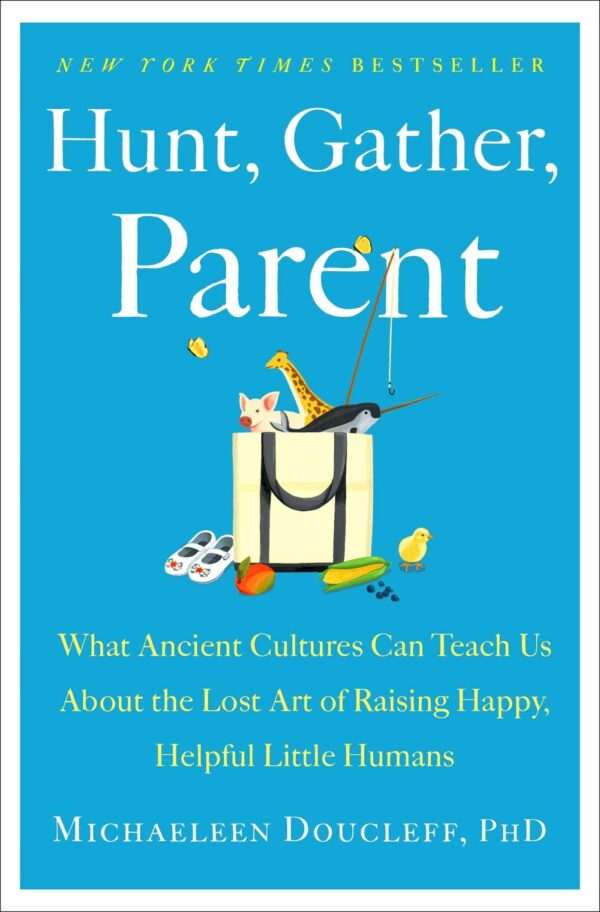
I have not conducted a line-by-line review of Hunt, Gather, Parent by Michaeleen Doucleff. What follows is drawn from the author’s interviews, publisher material, and multiple independent reviews.
The core argument is simple.
Modern Western parenting overmanages children.
Traditional societies do not.
Doucleff contrasts American child-raising practices with Indigenous families in Mexico, Tanzania and the Arctic. In those cultures, children are not the centre of the household. They are part of it. They observe, participate and contribute. They are expected to help. They are trusted earlier with real responsibility.
Western parents, by contrast, often negotiate, entertain, supervise and intervene.
The book argues this produces dependency, fragility and conflict.
That thesis has struck a nerve. Reviews broadly describe the book as accessible, practical and refreshingly calm in tone. Some critics caution that cross-cultural comparisons can risk romanticising traditional societies. That is fair. No culture is utopian.
But the underlying principle is sound.
Competence comes from participation.
This is not new. Outdoor communities have known it for generations.
A child who helps gut a fish becomes capable.
A child who carries a pack learns balance and judgement.
A child trusted with a knife learns respect.
Responsibility builds confidence. Shielding erodes it.
The book’s emphasis on calm authority is also relevant. Modern parenting advice often promotes negotiation as default. Traditional cultures described by Doucleff use quiet expectation instead. Adults lead. Children follow. Conflict is not escalated theatrically.
Outdoor safety operates on the same logic.
Clear leadership prevents risk.
Predictability reduces chaos.
Calm instruction builds trust.
The book also challenges the obsession with praise. In many Western settings, children are applauded constantly. In traditional societies, contribution itself is the reward. You are useful. You belong.
Belonging is stronger than applause.
This aligns directly with community-based recreation. Clubs, tramping groups, hunting parties and fishing associations function best when members contribute - not when they are spectators.
There is another layer.
Western parenting increasingly separates children from adult work. They are entertained while adults “do things.” In traditional models, children are included in meaningful tasks.
The outdoors remains one of the few spaces where that inclusion still occurs naturally.
You do not need a lecture on resilience when you are crossing a river.
You do not need a TED talk on teamwork when you are hauling a dinghy up a beach.
You learn by doing.
That does not mean rejecting modern knowledge. It does not mean abandoning safety standards. It does mean recognising that skill is developed, not downloaded.
The book’s popularity suggests a cultural hunger for something steadier and less performative.
If the argument is that children thrive when treated as capable contributors rather than fragile projects, that principle extends beyond the home.
It applies to how we raise young anglers.
How we induct new trampers.
How we pass on firearm discipline.
How we teach environmental stewardship.
Capability in youth is cultivated.
The outdoors remains one of the last reliable classrooms for that cultivation.