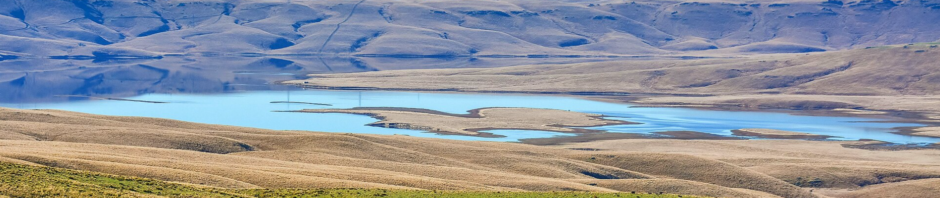
Lake Onslow may well be the most important infrastructure proposal of this generation.
A pumped hydro scheme capable of delivering up to 1000 megawatts of dispatchable power and 4 terawatt hours of storage is not trivial. In dry years it could reduce reliance on coal. It could firm wind and solar. It could materially strengthen national energy security.
Those are serious national benefits.
If New Zealand is to remain industrially capable and economically stable, we must solve the dry-year problem.
But there is a second principle at stake - and it is just as important.
The decision to refer Lake Onslow to a fast-track consenting panel fundamentally alters how a project of this magnitude is scrutinised.
Seven thousand one hundred hectares.
An 85-metre increase in lake level.
An 8-fold expansion of a man-made reservoir.
This is not a subdivision. It is a permanent reshaping of a landscape.
When projects of this scale are compressed through accelerated processes, the question is no longer simply whether the project is good policy. It becomes whether the public has been properly heard.
Support for strategic infrastructure does not require support for procedural shortcuts.
If Lake Onslow is truly in the national interest, it should be able to withstand full public scrutiny.
Local residents deserve meaningful participation. National stakeholders deserve transparent modelling, environmental assessment, and cost realism. Independent experts deserve time to test assumptions.
Fast-track mechanisms were justified as tools for efficiency. They were never intended to become mechanisms for insulation from public challenge.
We have learned - repeatedly - that governments do not always “know best”. Large projects have failed before. Forecasts have been wrong before. Economic models have proved optimistic before.
Democracy exists precisely to stress-test confidence.
There is a difference between urgency and haste.
Energy security is urgent.
Bypassing consultation is haste.
If the public is presented with the full case - costs, impacts, trade-offs, alternatives - and supports the project, then Lake Onslow will carry democratic legitimacy along with engineering ambition.
But legitimacy cannot be assumed. It must be earned.
New Zealanders are capable of understanding trade-offs. They can weigh inundated land against long-term energy stability. They can consider whether a 2035 operational target justifies the scale of change.
What they cannot accept indefinitely is being told that process is inconvenient.
Infrastructure that reshapes 7100 hectares should not depend on reduced scrutiny to remain viable.
If a project only works when democratic friction is removed, that is not a strength - it is a warning.
Lake Onslow may well be necessary.
But necessity does not nullify participation.
The public has a right - local and national - to have a say.
If the answer, after that debate, is yes, build it - then build it with confidence.
If not, that decision must also be respected.
Democracy is not an obstacle to infrastructure.
It is the foundation that makes national infrastructure legitimate.
The project leaces me with mixed feelings. I take the writers point about democracy but that term wears many dresses. The crazy point to me is that the proposal was rubbished by the coalition partners when Labour raised it. Now its okay.
Onslow has a good trout population. The expansion will allow for that to grow significantly. Perhaps we should be lobbying for the developers to include trout enhancement and walking/4X4 tracks around the new perimeter; plus an improved access road and parking. Such concessions have happenned before in hydro developments.
Why do we need to ‘drown’ Lake Onslow.
For electricity a far better move would be to close the foreign owned Bluff smelter which would stop the discount price – below cost- the smelter pays for power and that power would become available for the national grid.
The cost is incredible, into billions of dollars, and with likely “blow-out”. Initial cost estimates of $4 billion rose to between $8b and $15.7b, under Ardern’s Labour governmentwith some estimates warning of potential expenditures reaching $28.7b over 42 years.
The proposed lake would flood productive agricultural land, with loss of grazing grazing land. Wetlands would be lost. Lake Onslow is also a good trout fishery.
Former Labour government minister David Parker is on it I believe.
And didn’t National and Act and NZ First oppose it back then?
Hard to figure these politicians out with their smokescreens and mirrors.
Where else will power generation come from when most likely in another thirty or forty years our population could possibly double, it’s a big enough struggle now to satisfy electricity demands.
It will be an eyesore when it is empty. Close Teawhy and stop the data centre. Prudent in this situation!