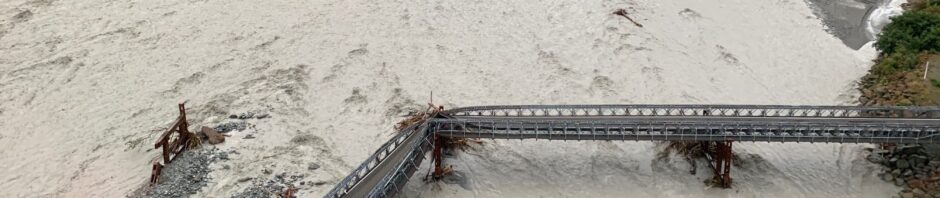
Another summer of disrupted roads, flooded valleys and closed tracks has prompted renewed discussion about how New Zealand should respond to increasingly volatile weather patterns. The RNZ analysis this week distilled several national-level lessons.
For outdoor recreationists, the lesson is simpler.
Conditions are changing. Competence must keep pace.
This is not alarmism. New Zealand has always been shaped by weather. Rivers shift. Hillsides slip. Coasts erode. What appears to be consolidating is the frequency of disruption and the exposure of ageing infrastructure.
Recreation does not become impossible in such conditions. It becomes more demanding.
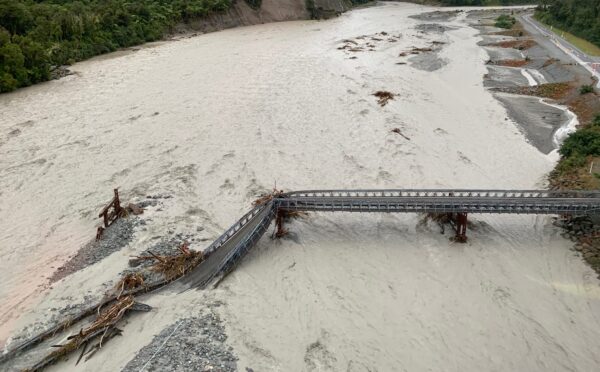
Infrastructure Is Not a Constant
Bridges are failing more often. Access roads are being undercut. Tracks vanish under slips.
Outdoor users should now assume that:
- Routes may be cut.
- Detours may be long.
- Hut access may be temporarily unavailable.
Leaving trip intentions, carrying margin in fuel and food, and checking updates are not optional courtesies. They are baseline competence.
At the same time, there is a structural question here.
Much public infrastructure was designed for historical rainfall averages. If design standards lag reality, repeated failure should not surprise us. Resilience must be engineered deliberately. Emergency repair cannot be the permanent model.
Access matters. If infrastructure repeatedly fails and is not rebuilt robustly, temporary closures quietly become permanent losses.
Rivers Deserve Respect
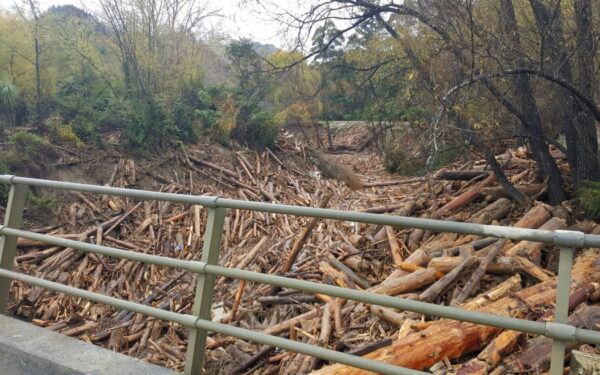
A river in flood is not simply deeper water. It carries altered channels, debris, undercut banks and unstable gravel bars.
A crossing that was routine last season may be impassable after a single event.
Outdoor competence includes:
- Turning back without hesitation.
- Understanding upstream catchment rainfall, not just local conditions.
- Recognising that braided rivers can reconfigure entirely.
Risk cannot be eliminated. It can be managed through judgment.
Overconfidence is dangerous. So is assuming that regulation can remove danger entirely. Skill and experience remain the first line of safety.
Weather Literacy Over App Dependence
Forecasting tools are excellent. They are not guarantees.
Outdoor users benefit from understanding:
- Orographic rainfall patterns.
- Wind acceleration through valleys.
- Snowpack instability following warm rain.
- Tidal interaction with storm surge.
Technology assists judgment. It does not replace it.
The culture of New Zealand recreation has long valued reading the land and sky. That tradition should be strengthened, not eroded.
Coastal Conditions Are Changing
Storm surge and prolonged heavy rain are altering familiar coastlines.
Cliffs slump after saturation. Beaches reshape. Access tracks disappear.
For fishers, divers and coastal walkers, local knowledge must be constantly refreshed. Yesterday’s safe platform may not exist today.
Here again, preparedness protects more than the individual. It protects emergency capacity and supports the case for continued public access.
Avoid the Wrong Response
When extreme events accumulate, pressure builds for blanket closures, risk-averse policies and permanent restrictions.
Safety matters. But regulation should not replace competence.
Temporary hazard management can be appropriate. Permanent access loss justified solely by weather volatility deserves careful scrutiny.
Environmental limits are real. So is the public’s right to responsibly enjoy rivers, forests and coasts.
The durable response is not retreat. It is:
- Better infrastructure design.
- Honest hazard assessment.
- Skilled users.
- Clear information.
Stewardship Through Competence
Prepared recreationists reduce pressure on emergency services. They minimise rescue risk. They demonstrate that use and stewardship can coexist.
This strengthens the case for keeping public land and water accessible.
Outdoor culture in New Zealand has never depended on certainty. It depends on judgment, planning and respect for conditions.
Wild weather does not change that principle.
It reinforces it.
Prepared, not alarmed.
A timely article when I look out the window.
The SAS adage “Prior planning prevents a piss poor performance” holds true with outdoors adventures.
I have camped in the Westland back country through a week of continuous rain and remained safe and warm through having good gear. While not something I would not willingly experience, it was a confidence building exercise.
I was able to exit the Waitoto Valley when the valley floor went under water through the use of a sat phone I had taken in on a roar block.
I note most Te Araroa Trail walkers have a map and an InReach attached to their person.
Even so, many from overseas suffer from prioritizing weight over safety. I am presently reading Peter Jerram’s book about the 1968 Wahine disaster. In it the author describes how warm air from tropical cyclones colliding with cold fronts create storms of great destruction.
Balancing resilient infrastructure against rates leaves regions like Westland exposed in a landscape of massive slips, wind thrown forests and huge rain events causing rivers like the Whataroa and Waiho to avulse from their fairways. The Southern Alps of Westland are overdue for a massive earthquake through fault line movement.
Self-reliance and mental resilience are part of the preparation package.