
Part One of a CORANZ series on risk, competence, and access
By Andi Cockroft, Chair, CORANZ
Prompted by this Stuff article, I began thinking what has happened to New Zealand since my childhood.
I learned to swim at school. From the age of seven through to eleven, swimming lessons were simply part of life. We walked to the local pool with our class. No forms. No fees. No sense that this was unusual or optional. It wasn’t framed as sport, or even recreation. It was treated as something you needed to know - like crossing a road or tying your shoelaces.
That experience was common in the 1950s and 60s. Today, it is not. Which raises an obvious question: what changed?
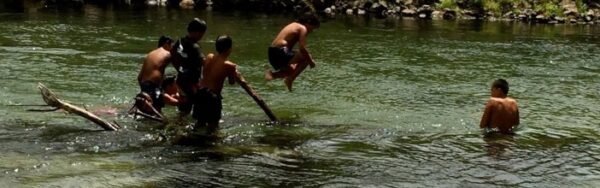
Swimming did not become less important. New Zealand did not move away from rivers, lakes, beaches and boats. If anything, our exposure to water increased as population grew and recreation expanded. So why did a basic life skill quietly slip out of universal provision and into the category of “if you can afford it”?
This article is the first in a CORANZ series looking at risk aversion - how it has reshaped access, competence, and outdoor life. Swimming is an ideal place to start, because it shows the pattern clearly.
In earlier decades, schools accepted a degree of responsibility - and risk - in teaching practical skills. Teachers supervised swimming without specialist qualifications. Children swam in pools, rivers, sometimes even harbours. The assumption was not that accidents would never happen, but that competence reduced risk far more effectively than avoidance.
At some point, that assumption flipped.
Swimming became a “high-risk activity”. Supervision standards tightened. Instructor certification became mandatory. Ratios were specified. Transport requirements multiplied. Consent forms appeared. Liability loomed. The cumulative effect was predictable: schools began opting out.
Was that decision ever debated publicly? Or did it simply become easier to stop than to adapt?
At the same time, funding models shifted. What had once been publicly provided as a drowning-prevention measure became a user-pays activity. Swimming lessons were rebranded as something parents should organise privately. The result was not that swimming stopped being taught - but that it stopped being taught equally.
Who benefits from that change, and who misses out?
Today, we rely on charities and campaigns to fill the gap schools once covered automatically. Programmes aim to teach thousands of children water skills each summer. That is laudable. But it also begs another question: why are we fundraising for something we once considered a core public responsibility?
Risk aversion rarely announces itself. It advances quietly, often under the banner of safety. In swimming, the logic seems sound on the surface: reduce exposure, reduce liability, reduce harm. But does removing instruction actually reduce risk - or does it simply delay it until children encounter water without skills?
If children don’t learn to swim at school, do they avoid water altogether? Or do they still end up at rivers, lakes and beaches - just without competence?
New Zealand’s waterways have not disappeared. What has changed is how we manage people’s interaction with them. Increasingly, the response to risk is signage, restriction, and warning rather than skill-building. “Dangerous water.” “No swimming.” “Swim at your own risk.” These messages are everywhere. But signs don’t teach survival. They don’t build confidence. They don’t create judgement.
Is this really safer - or just more defensible?
From an outdoor access perspective, the implications are profound. When people lack basic competence, authorities respond by narrowing access. When access narrows, outdoor participation declines. When participation declines, public connection to waterways weakens. And once that connection weakens, it becomes easier to justify further restrictions.
Risk aversion doesn’t remove risk. It relocates it.
Swimming also highlights the generational shift in expectations. Many older New Zealanders assume swimming is “just something kids learn”. That assumption is no longer safe. Increasingly, whether a child learns to swim depends on postcode, parental income, transport, and awareness. Is that acceptable in a country defined by water?
And if swimming can slip quietly from universal provision to optional extra, what other outdoor competencies have followed the same path?
We see similar patterns elsewhere. Outdoor education programmes trimmed. School camps dropped. Informal play discouraged. Climbing trees fenced off. Rivers labelled unsafe rather than taught. Each change is defensible in isolation. Together, they point to a culture increasingly uncomfortable with managed risk - even when that risk is the pathway to competence.
The irony is hard to miss. In trying to protect children from harm, we may be depriving them of the skills that best protect them.
This series is not about nostalgia. It is not a call to return to careless practices. It is about asking whether we have lost balance. When did avoiding responsibility become preferable to teaching competence? When did fear of liability outweigh the benefits of capability? And how often do we respond to risk by closing doors instead of equipping people to walk through them safely?
Swimming is only the beginning. In future articles we will look at how risk aversion has reshaped outdoor education, public access, signage, and liability - often with unintended consequences for recreation and connection to the outdoors.
For now, one question is enough: if we no longer trust ourselves to teach children how to survive in the water, what does that say about how we approach risk everywhere else?
Because rivers, lakes and beaches are not going away. The only real choice is whether we meet them with competence - or with signs telling us to stay back.