
Part Two of a CORANZ series on risk, competence, and access
By Andi Cockroft, Chair, CORANZ
If swimming was once taught because water was part of everyday life, something else has quietly taken its place. Where skills were learned, risk is now managed. Where competence was built, liability is now controlled. And where people were once trusted to learn, they are now warned.
This article picks up the second thread in this series: how risk management has increasingly replaced skill - and what that shift means for outdoor access.
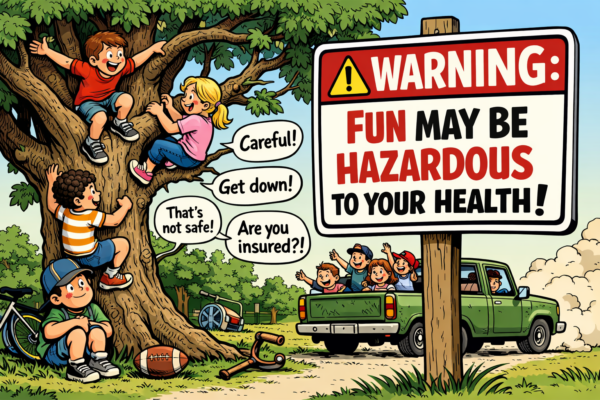
Risk management sounds sensible. In many contexts it is. Identify hazards, reduce exposure, document decisions. But when applied to outdoor life, it often produces a very particular outcome: remove the activity rather than teach the skill.
Why teach children to read rivers when a sign saying Dangerous Water is easier?
Why build competence when fencing, closure, or prohibition carries less legal risk?
Why invest in people when it’s simpler to manage paper?
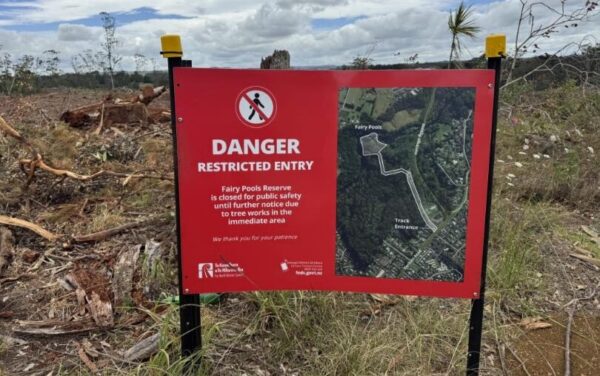
Across New Zealand’s outdoors, the pattern is familiar. Warning signs multiply. Access becomes conditional. Activities once regarded as normal are reclassified as risky. The response is rarely education; it is restriction.
This shift didn’t happen overnight. It crept in through policy language, health and safety frameworks, and a growing fear of blame. Risk, once understood as something to be managed through experience and judgement, became something to be eliminated where possible.
But can risk really be eliminated in the outdoors?
Rivers still flow. Weather still changes. Terrain still varies. The difference is not the presence of risk, but how we respond to it. Increasingly, the response is to narrow the margin of acceptable behaviour rather than widen the base of competence.
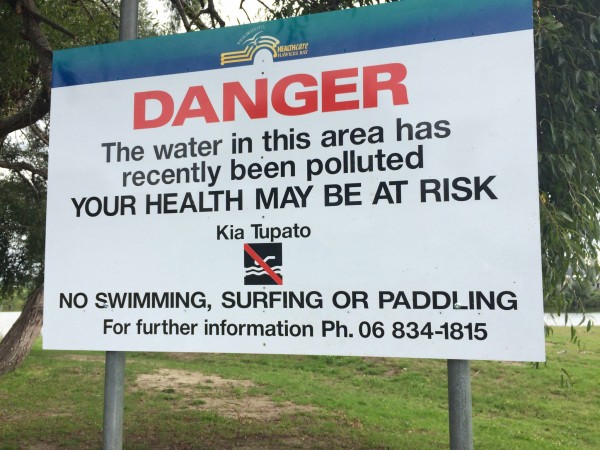
Consider how many outdoor spaces now rely on signage instead of instruction. “No swimming.” “Unsafe conditions.” “Proceed at own risk.” These messages are everywhere. They are clear. They are defensible. But do they make anyone more capable?
If a sign replaces a skill, what happens when the sign is ignored - or absent?
Risk management also tends to treat people as a uniform group. Everyone is assumed to have the same vulnerability, the same lack of experience, the same need for protection. Yet outdoor users are not homogeneous. Some are skilled. Some are learning. Some are cautious. Some are not. Managing risk by exclusion removes nuance.
Is the solution to inexperienced users really to exclude everyone?
From an access perspective, this has consequences. When authorities focus on risk avoidance rather than skill development, access becomes fragile. A single incident can trigger closure. A complaint can lead to restrictions. A risk assessment can justify removal of facilities rather than improvement.
We see this with river access points closed because swimming is deemed unsafe. With tracks rerouted or abandoned rather than maintained. With campsites restricted because managing behaviour is considered too difficult. In each case, the underlying message is the same: it is safer to limit access than to invest in capability.
But safer for whom?
Risk management frameworks are designed to protect organisations, not experiences. They reduce exposure to liability, not necessarily harm. When applied without balance, they shift responsibility away from institutions and onto individuals - often without equipping those individuals to manage that responsibility.
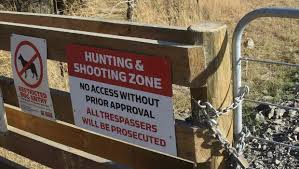
“Proceed at your own risk” assumes the ability to assess risk. What if that ability was never taught?
This is where risk management becomes self-reinforcing. As skills decline, risk increases. As risk increases, restrictions tighten. As restrictions tighten, opportunities to build skill disappear. The cycle continues, quietly narrowing the scope of outdoor life.
Is this really a safer society - or just a more constrained one?
There is also a cultural cost. Outdoor competence once carried social value. Knowing how to swim, read weather, judge terrain, or look after yourself was part of growing up. Today, those skills are increasingly treated as specialist, optional, or the responsibility of private providers.
When did learning become something we outsource rather than embed?
None of this is an argument for recklessness. Risk exists. Harm occurs. But the answer to risk has never been its elimination. The outdoors has always required judgement. The question is whether we still believe judgement can be taught - or whether we have lost faith in that idea.
For CORANZ, this matters because access does not disappear only through law. It disappears through process. Through risk assessments that recommend closure. Through signage that discourages use. Through the quiet accumulation of “just in case” decisions.
Risk management, when detached from skill development, becomes a form of access erosion.
This series is not about opposing safety. It is about questioning how safety is pursued. Is it achieved by narrowing participation? Or by building competence across the population? Is it better served by signs, or by skills?
Swimming showed us what happens when instruction is withdrawn and replaced by warning. The same pattern now appears across outdoor education, public access, and recreation infrastructure.
In the next articles, we will explore how this shift plays out in specific settings - from rivers and tracks to camps and public reserves - and ask whether a better balance is still possible.
For now, one question frames the issue clearly: when risk management replaces skill, who really benefits - and who quietly loses access as a result?
Because the outdoors does not become safer simply because fewer people are allowed to engage with it. It becomes safer when more people are capable of doing so wisely.