
by Lewis Hore
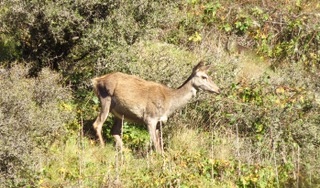
The bias against introduced wildlife species such as deer, trout, even possums and other creatures liberated by the first European settlers needs burying.
There have been pleas in past years to ditch the doctrine.
I recently chanced upon one by none other than former Conservation minister Nick Smith, made quite a few years earlier
Dr Smith said in an address to the 1996 New Zealand Deerstalkers’ Association’s annual conference: “It is important to bury the current dogma that exists about introduced species.”
He cited strong feelings against deer and even sports fish such as trout “in some quarters such as the Forest and Bird Society and within the Department of Conservation”.
Dr Smith accurately pointed out the selective hypocrisy in the anti-introduced dogma, saying it was undeniable New Zealand had benefited from introduced species from farmed animals such as sheep, dairy cows, cattle and deer as well as fruit trees and vegetables.
I could not agree more.
Even the demonised possum is accused of browsing vegetation. After all several million moas browsed vegetation for some 60 million years.
But are browsers of foliage simply to be damned because of their diet?
Would DoC and Forest and bird demonise moas because they browsed foliage?
A Scientist Speaks Out
Do browsers such as deer, chamois, tahr, possums and others deserve the sentence of death because they browse snow-grass or Griselinia littoralis, commonly known as broadleaf?
Certainly, one of Landcare Research’s more experienced and senior scientists, Graham Nugent, does not think so.
In 1994 at a Doc “Possum Pest” workshop, he dismissed the oft-quoted figure of 70million possums, was a “back-of-a-cigarette-packet” calculation.
He told Doc managers, even accepting the highly exaggerated figure, 70million possums would gobble only about a fifteenth (7%) of the new foliage produced every 24 hours by forests.
Doc, after peddling the fictitious 70million possum figure for decades, has recently reluctantly revised that to about 35million – probably still far-fetched.
But accept the 35 million figure and possums would consume only 3.5% of new foliage.
Is that a forest pest?
The”bush” as we affectionately know it, has been browsed not just since European settlement but for millions of years. Several species of moa and birds such as takahe, kakapo, kokako and pigeon were vegetarian browsers.
Moa were exterminated by intensive hunting and habitat destruction by early Maori.
Following the moa extinction, New Zealand’s vegetation entered an “unnatural” phase (AD1400 to AD1850) as world-eminent New Zealand ecologist the late Dr. Graeme Caughley described it.
Dr Caughley said up to “about AD 1400 the herbivore component of the plant-herbivore system was dominated by a large number of avian grazers and browsers”.
Following the disappearance of moa, the plant composition would have changed markedly, but “plant-herbivore systems were again established after 1850, this time with mammals as the dominant herbivores”.
Dr Caughley then added, “the only safe guess … is that the pre-1400 plant-herbivore system was closer ecologically to the post-1850 system, than either was to that existing between those two dates”.
Dense bush
What was the bush like in 1642 when Abel Tasman sailed the coast or 1769 when Captain James Cook landed, or when in 1840 the Treaty of Waitangi was signed?
Almost certainly it was unnaturally dense, because it was largely not browsed as several million moa had done so for more than 60million years.
It is very likely about AD 1000 the forests were open with kakapo and moa trails and their browsing opening them up.
The restoration of browsing by early settlers liberating deer and other game animals plus possums for fur and meat, to some extent restored the ecosystem.
Browsing is a necessity for the functioning of the natural ecosystem.
The defensive mechanisms Nature has evolved (e.g. divaricating “basket-weave” shrubs, thorns – for example bush lawyer, stinging nettle – and even toxins – for example tutu, native orchid, oxalis, dracophyllum, St John’s wort) and the aggressive ability of “pruned’’ native trees to re-sprout, point to heavy browsing in pre-Maori millenniums.
Yet, Doc, urged by irrational extreme green organisations, dogmatically sees the introduced wild animals as ecological pests.
At the same 1996 conference at which Nick Smith decried “introduced dogma”, Doc manager Keith Lewis said “deer by their browsing are a threat to forest health”.
He thus revealed his and his department’s total ignorance of ecological evolution and ecological reality.
● Lewis Hore is based in Oamaru and has about 50 years of back-country and wilderness experience. He describes himself as a conservation advocate.
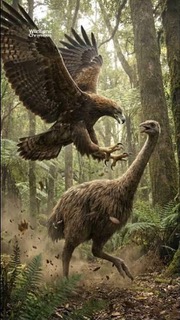
Moas were preyed on by the giant Haast’s Eagle
Yes Nick Smith was right in this article but how about when he as minister took approval of 1080 drops off local bodies and gave himself sole say.
Proves you cannot trust a politician. Nick Smith is a typical politician.
Good article. Well said Lewis Hore.
I wonder how long it would take for ecological balance to be restored if ALL humans were removed from these beautiful islands? Humans cause nothing but trouble wherever they go, what a pestilential species we are.
I do have to wonder about the “ robust science “ produced by the DoC and Forest and Bird regarding the damage caused by todays browsers. Forests need animals to replace moa to keep the Forest floors open to ground feeding birds such as tomtits bush robins kiwi ect otherwise they would join extinct species such as the Haast eagle
Aside from anything else, I cannot comprehend how DOC manages to convince successive governments to provide significant amounts of scarce taxpayer funding for what can only be described as landscape-scale ecocide.
Globally, the population of humans has more than doubled, since 1970.
During a similar period, global wildlife has collapsed, by more than 60%.
Studies have suggested a 75% reduction in global insect wildlife, in the past two or three decades.
More than 93% of mammalian biomass on the planet now either human, or the animals we farm to feed ourselves.
We are amidst the 6th mass extinction .. which some have dubbed the Anthropocene Epoch, because our species is the primary causal factor.
And yet, here in New Zealand, we aerially, indiscriminately apply thousands of tonnes of a WHO-classified Class 1A ecotoxin .. originally developed as an insecticide, and which kills everything that consumes oxygen .. across millions of hectares of otherwise pristine bush and backcountry.
It’s bad enough that our agricultural farming practices are a major contributor to the loss of insect biomass (due to the use of pesticides to improve crop efficiency) .. but to then turn around and, completely discretionarily, carpet-bomb our backcountry .. with poisoned cereal baits formulated to mimic food?
It’s no wonder they kill target and non-target, introduced and indigenous, mammalian, avian, and reptilian, vertebrate and invertebrate species alike.
The whole thing is based on lies. We’re told the poison doesn’t enter the food chain .. but everything enters the food chain.
Hell, the method of killing mustelids is via secondary poisoning.
If that’s not evidence of the poison entering the food chain .. what is?
For years, they tried to cover up how it kills Kea, and other species .. then they couldn’t cover it up any more.
Only one country in the world is stupid enough to do what we do here in New Zealand, on the scale we do it.
It’s mankind doing .. what mankind does.
It’s the kind of thinking that result in mankind having such a destructive effect on the species we share our planet with.
As Einstein told us (paraphrased) .. we cannot fix the problems we’ve created .. with more of the same sort of thinking we used when we created them.
It’s sheer, unadulterated madness.
As the late Dr Jane Goodall told us, when she last visited New Zealand .. we must be able to find a better way (our response? .. dramatically increase our usage!)
David Attenborough won’t have a bar of it (I personally have a handwritten letter from him saying so).
The sooner we bring an end to it, the better.
One day, future generations will look back on this period .. and it will not be regarded as good reading …
The introduced species have the place in the environmental food chain for both the biodiversity and the human chains.
The kill everything is as alive as ever, ridiculous when these wasteful and in the case of 1080, inhumane, decisions being made on behalf of Kiwis that mostly disagree with these one eyed wankers.