

“Countries around the world are trying everything from financial incentives to law changes to try to reverse declining birth rates. None of it is working,” said a new item on Radio New Zealand 9 April, 2026.
The news item continued “More and more, people are choosing to go against social norms and live a child-free lifestyle.”
Distinguished Professor at Massey University Paul Spoonley sees several reasons. As for reasons why women are deciding not to have kids?
International evidence suggests there are two reasons: their increased level in qualification and their participation in the work force.
But Paul Spoonley thinks there are other reasons, too.
“One is the cost of having children… there’s an increasingly economic dimension: Can I afford to have children? Do I want to have children and not have a house?
“And the [other] factor, I think, is the concerns particularly amongst millennials, and I think Generation Z, that the environment is important: Can I have children and not impact upon the environment?”
This problem perceived is far from unique to New Zealand. Around the world, governments are providing financial incentives to encourage couples to have children.
But are governments and politicians just short-sighted, i.e. myopic and focussing on the next election and getting back into parliament every three years?
Apart from concerns about the impact on the environment, the reasons for lower birth rates are largely economic related to the cost of living and buying a home. Yet governments don’t want an ageing population i.e. people living longer.
So they ramp up immigration.
But let’s just consider the matter in numbers and relate to the impact on the environment of people and more and more people.
More “growth”
The more people the greater demand for resources, more cars and planes – more emissions.
Why are politicians in denial as to the cause and instead seek to deal only with the effects and symptoms?
Why are politicians so obsessed with growth and more growth?
Controversial author Paul Erlich warned about the people problem in his 1968 book “The Population Bomb”.
In New Zealand in the 1970s – almost 50 years ago – a few enlightened environmentalists such as “Save Manapouri” conservationist and NZ Deerstalkers Association president John B Henderson publicly warned about the folly of “further proliferating the hordes of humanity.”
Western countries like New Zealand should be leaders to address the ticking “population time bomb”.
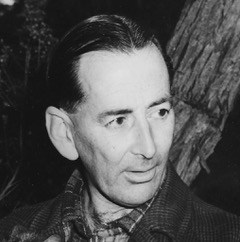
John Henderson – 1970 – “5 million the limit”
Yes there have been the occasional murmur like the Intergovernmental Panel on Climate Change (IPCC) briefly acknowledging that “Globally, economic and population growth continued to be the most important drivers of increases in CO2 emissions from fossil fuels.”
But in New Zealand, politicians’ emissions of hot air reach hyperbolic heights while decades of politicians have blithely boasted of GDP and population growth rates seeming oblivious and unconcerned our population is now over five million.
Five million is significant for John B Henderson 50 years ago said “it is high time New Zealanders set themselves an upper limit — I have no hesitation in tabling my own estimate – it is 5 million people.”
No People Policy
But New Zealand still has no population policy.
Governments pursue growth with a maniacal passion and no control. Maximum growth – more people is the mantra. Serious regional imbalances exist, most graphically illustrated by Auckland busting at the seams, demanding more taxpayers’ money for roading and motorways, upgrading of sewers and stormwaters etc., and sprawling outwards over fertile soils.
Immigration proceeds apace swelling numbers and diluting and eroding the Kiwi culture evolved from two ethnic groups and developing a bi-cultural society.
Tauranga has burst its seams sprawling over fertile farm land. Wellington’s motorway is now creeping north of Otaki and aiming at Levin. Then in less than a decade, it will aim for Foxton?
All that’s needed to address the spiralling crisis is political will and political guts.
Amazingly the Green Party who you might expect to champion addressing the population bomb have been relatively quiet.
The Green Party is preoccupied.
Only NZ First has drawn attention to immigration.
But the sharp reality is more people and more consumers equal more resource demand, force more costly infrastructure demand and make more emissions. More, more and more emissions and pollution.
The planet cannot tolerate infinite growth. It’s already at a crisis.
What is the answer to the dilemma?
What do you think?

I see the NZ Initiative sees one factor to offset the population problem of ageing as “rolling out the welcome mat for direct foreign investment in our economy to create more high wage jobs would be one way to revive New Zealand’s sclerotic productivity growth.”
Haven’t successive government already done this so sector like forestry and wine are over 80% foreign corporate owned with profits going off-shore?
That’s a big bit of myopic thinking.
NZ Initiative by the way is the old business Roundtable of Rogernomics. Enough said.
As human populations continue to rise, the demand for food, water, and energy also escalates. This rapid increase in people numbers presents numerous challenges, ranging from strain on natural resources to environmental degradation.
Over-population and overcrowding causes significant stress in both humans and animals, a phenomenon heavily influenced by classic research on rats that demonstrated a “behavioural sink” (a complete breakdown in social behaviour). When confined with limited resources, rodents in these studies became hyper-aggressive, violent, or withdrew entirely. These behavioural responses mirror stress responses in densely populated human environments. Result an arrogant, competitive society and higher crime rates.
Population growth is a challenge with both opportunities and risks. While it drives economic development, it also strains resources, harms the environment and worsens issues like poverty and unemployment. It’s really short term monetary gains versus long term people well-being and environment issues.
I remember the old “Values Party” of the 1970’s, which was the first NZ political party to have a policy of zero population growth. Many were horrified, and the party slowly dwindled. Maybe they were right?
It’s so simple and logical. More and more does not mean better and better where resources and environment are concerned – and for that mater human happiness
New Zealand’s strength is having a small population thus leaving enough food for export ? Also N.Z. was one of the few Nations in the World that relied totally on Agriculture & did well ! John Henderson back in 1970 was correct.