Sometimes the most effective ways of getting people outdoors don’t look like policy at all.
What Worked - and Who Could Do More
The recent Waikirikiri Selwyn Treasure Hunt has now finished for the season, but it’s worth pausing to reflect on why it worked - and what others might learn from it. Not because it was large or expensive, but because it was simple, local, and human in scale.
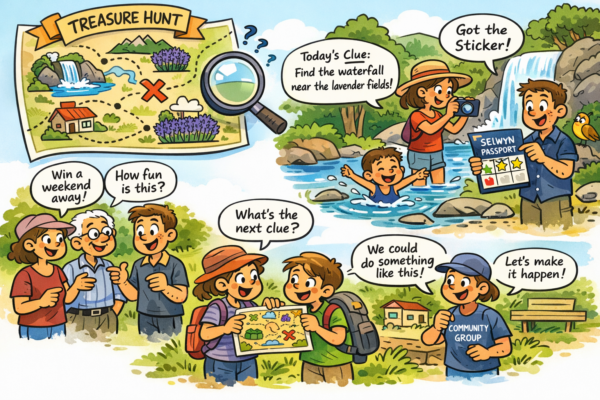
At its heart, the initiative did three things well. First, it gave people a reason to go. A small nudge - a clue, a sticker, a prize - was enough to get families and individuals off the couch and into places they might otherwise have driven past for years. Second, it lowered the threshold for participation. No specialist gear, no fitness requirement, no expertise. Just curiosity and time. Third, it mixed natural places with everyday destinations, quietly reinforcing the idea that outdoor spaces are part of normal life, not something separate or intimidating.
Most importantly, it created positive contact with place. People didn’t just see locations on a map; they visited them, lingered, talked about them, and shared them. That kind of engagement builds familiarity - and familiarity is often the first step toward care.
What’s notable is that this didn’t require regulation, enforcement, or messaging about behaviour. It relied instead on encouragement and discovery. The outdoors wasn’t framed as fragile, dangerous, or exclusive, but as something welcoming and worth exploring.
There’s a lesson here that extends well beyond local government. Councils aren’t the only ones with the ability to encourage outdoor participation. Community trusts, sporting bodies, philanthropic organisations, tourism groups, industry associations, and even large employers all have resources, networks, and reach. Many already invest heavily in messaging, branding, or compliance. Far fewer invest in invitation.
Small, well-designed initiatives - a challenge, a trail, a passport, a reason to explore - can have disproportionate impact. They don’t need to be permanent. They don’t need to be perfect. They just need to give people permission to step outside and discover what’s already there.
If we genuinely want more New Zealanders connected to land and water, this is one of the quiet ways it happens - not through grand strategies, but through simple reasons to go and see for ourselves.
The Selwyn example shows that when organisations make outdoor engagement easy and appealing, people respond. Others could do the same - and perhaps should.
You are so right Andi. Getting our mokopuna off their devices and outside is one of the greatest gifts that we can give them.