
This Should Alarm Anyone Who Cares About Rivers
CORANZ commentary
By Andi Cockroft, Chair, CORANZ
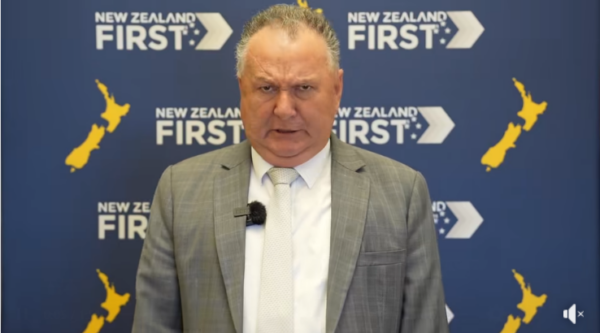
Recent discussion from NZ First about giving ministers the final say on fast-track project approvals should give anyone with a memory of Canterbury pause.
Not because development is inherently wrong. Not because infrastructure isn’t needed. But because we have already seen what happens when environmental decision-making becomes overtly political rather than independent, evidence-led, and locally grounded – and as in 2010, a Prime Minister (John Key) and minister (Nick Smith), without consulting the public, make an undemocratic move..
Canterbury’s rivers are the case study New Zealand should not forget.
When Environment Canterbury was replaced by government-appointed commissioners, the justification was efficiency. Decision-making was said to be slow, contested, and holding back economic progress. Political intervention was framed as a reset - a way to cut through complexity and deliver certainty.

What followed was certainty of a different kind. Efficiency was pushed into the background by a flood of consents for irrigated dairying, a good number for corporate interests.
Minimum flows were weakened. Cumulative effects were downplayed. Water Conservation Orders were ignored. Irrigation consents accelerated. Rivers that once defined the region’s identity were steadily pushed beyond ecological limits. Recreational values - swimming, fishing, boating - became secondary considerations rather than core ones.
None of this required bad faith. It required only a shift in who held the pen.
Once environmental outcomes became subject to political priorities, trade-offs were no longer assessed neutrally. They were weighed against economic narratives of the day. Long-term damage was discounted. Short-term gains were elevated. Rivers do not recover on election cycles.
This is why proposals to place final fast-track decisions in ministers’ hands are so concerning.
Fast-track regimes already compress process. They limit consultation, constrain appeals, and accelerate approvals. That may be defensible for genuinely exceptional projects - if decisions remain grounded in independent expertise.
But when political offices become the final arbiters, a line is crossed.
At that point, environmental limits are no longer boundaries. They become variables.
Who decides whether a river can absorb more abstraction?
Who weighs habitat loss against economic benefit?
Who decides which expert advice matters most - and which can be set aside?
If the answer is “the minister of the day”, then environmental protection becomes contingent, not principled.
Canterbury showed us how easily that happens.
The commissioners were not environmental villains. They operated within a mandate that prioritised delivery. But delivery has direction, and direction was set politically. Once that model was normalised, reversing it proved extraordinarily difficult. Even after elected councillors returned, the damage - ecological and institutional - had already been done.
For organisations concerned with outdoor recreation, this history matters deeply.
Rivers are not abstract policy units. They are places people swim in, fish from, paddle, and teach their children to read and respect. When flow regimes are altered and water quality declines, access is quietly lost. Not through fences or signs, but through degradation.
In addition, rivers are habitat for native fish and river beds for precious bird species, at times rare species.
And once lost, it is rarely restored.
Supporters of ministerial decision-making often argue that elected officials are accountable to voters. That is true - but accountability after damage is a poor substitute for independence before it occurs. Ministers are accountable for outcomes across portfolios. Rivers, forests and coasts rarely sit at the top of that list when economic pressure mounts.
That is precisely why independent panels exist. Their role is not to obstruct development, but to ensure that environmental limits are not eroded by political convenience.
CORANZ does not oppose development. It does not oppose infrastructure. It does not oppose reform. But it does oppose repeating mistakes that we already understand.
Canterbury taught us that once environmental decisions are politicised, the balance shifts quickly and quietly. The effects are cumulative. The recovery, if it comes at all, takes decades.
Fast-track legislation should be designed to protect against that risk, not amplify it.
If ministers wish to set national policy, after public consultation, that is appropriate. If they wish to define strategic priorities, that is legitimate. But deciding individual environmental outcomes - especially under compressed fast-track processes - crosses into dangerous, undemocratic territory.
We should be asking hard questions now, not after the damage is done.
What safeguards prevent political override of expert advice?
What weight is given to cumulative environmental effects?
What recourse exists when fast-track decisions harm public places?
What lessons from Canterbury have been formally incorporated - and which have been ignored?
CORANZ has long argued that outdoor places are best protected when decision-making is independent, evidence-based, and insulated from short-term political pressure. That principle is not ideological. It is practical. It is grounded in experience.
We have seen what happens when it is abandoned.
The risk now is not theoretical. It is historical. And it should alarm anyone who believes rivers, coasts and landscapes deserve protection that outlasts a political term.
If fast-track decisions become political decisions, then environmental protection becomes a campaign issue rather than a constant. Canterbury’s rivers remind us what that looks like in practice.
We should not need to learn that lesson twice.

“None of this required bad faith. It required only a shift in who held the pen.”???!
Of course it required bad faith.
Wyatt Creech, director to two dairy companies and ex National MP, justified the sacking of elected ECan councilors on the pretext that the Canterbury Regional Council who were having regard to the RMA 1991, were failing to manage a “white gold rush” that flooded the council with consent applications. The actions of a prime minister who made his fortune from “futures trading”, (insider trading?), shocked New Zealand’s legal fraternity with his constitutionally repugnant ECan Act 2010.
The Rakaia River NWCO (1988) was amended through an ECan managed “irrigation” Hearing that was a process to legitimize a predetermined outcome instead of this river equivalent of a National Park being altered following an Act of parliament.
Only bad faith would claim that a river diversion is not a water abstraction.
Only bad faith would knowingly pollute Central Canterbury’s groundwater to the extent that ECan voted to declare a Nitrate Emergency. A nitrate emergency created in spite of knowing ensuing irrigation development would raise groundwater nitrate levels above the MAV.
Only bad faith would prompt ECan to seek a Declaration in the Environment Court that it was not accountable for monitoring and enforcing the Rakaia WCO when it knowingly issued the consents that destroyed the Rakaia River values that the WCO sought to protect.
Only bad faith would allow the gerrymandering of the Selwyn District representation on ECan giving Selwyn ratepayers votes less than half the rights of a South Canterbury ratepayer.
Only bad faith would cause the government to signal the demise of ECan through replacing it with a Combined Territorial Authority of District mayors justified as “balancing” the low number of voting ratepayers against the geographical size of the Districts – tipping control of the region’s water in favor of water users.
Only bad faith would cause the government to gain farmer buy in by dropping user-pays for diffuse farm pollution sweetened with a $NZ 435 million “irrigation enhancement fund” of taxpayer money.
Only bad faith would privatize profits and publicize pollution.
Only bad faith would ignore the RMA first order priority to protect the environment for present and future generations with second order priority for irrigation.
Only bad faith would knowingly destroy New Zealand’s premier salmon fishery.
I do agree that the current RMA “reforms” are simply an extension of this bad faith.