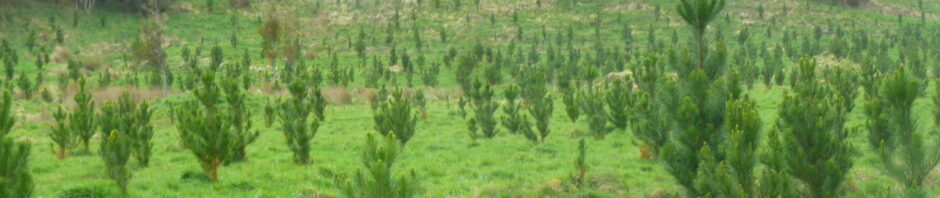
by Tony Orman
What lies behind the green curtain of ever-expanding pine forests energised by New Zealand’s illogical, irrational carbon trading scheme where once highly productive sheep and beef farms are planted in unmanaged, neglected forests.
New Zealand was once a land of productive farms and independent food producers, but it is quietly – insidiously – being taken over by pine monocultures, fast growing water-sapping pine monocultures.
Is this strategic land repurposing?
Isn’t its real goal more about money for speculators, often corporate in nature, than about environmental sustainability/?
Is the real agenda control consolidation and carbon manipulation?
People need to question what is the real agenda hidden beneath the growing monoculture of pine trees and their needles.
Where did it start?
The Emissions Trading Scheme (ETS) was established by the fifth Labour Government and legislation was enacted in 2008 under Prime Minister Helen Clark, who had strong ties to United Nations. It was designed to meet obligations under the Kyoto Protocol
The Climate Change Response (Emissions Trading) Amendment Act 2008 passed in September 2008, establishing the framework.
Carbon Trading
A couple of months later on November 8, an election was held and National became government led by former money trader John Key. Further tinkering by the Key government set up carbon trading. In 2017 Key abruptly resigned on the eve of the 2017 election, received a knighthood and a Labour government assumed power led by Jacinda Ardern.
Under the Ardern-led Labour government (2017–2023), New Zealand’s Emissions Trading Scheme (NZ ETS) underwent significant reform, but its “open door” welcoming to foreign speculator investment for carbon forestry created controversy.
The Labour government faced criticism for allowing “special forestry tests” under the Overseas Investment Act, which made it easier for foreign investors to come to New Zealand and purchase farmland for pine plantations to generate carbon credits.
Foreign and corporate entities, often overseas interests have since been buying up farms, especially sheep and beef cattle farms and converting them into radiata pine plantations.
In 2023, the Labour government was dumped and a coalition government headed by National with support from the NZ First and ACT parties was formed.
Coalition Government
Oddly, in the three years of the coalition government, little or no effort has been made to curb the loss of food producing farms to unattended carbon trading forests, despite rising public concern and strong advocacy from NZ Federated Farmers.
Delving into the detail, it’s not hard to find the reason.
To the contrary, the National/Act/NZ First coalition government has quietly tied the hands of New Zealand to continue carbon trading involving converting farms to pine monocultures by signing up to “The Coalition to Grow Carbon Markets”.
The “Coalition to Grow Carbon Markets” is a government-led initiative launched in November 2025 at the United Nations COP30 conference by countries including Kenya, Singapore, UK, Canada and New Zealand and supported by several other countries, to boost “high integrity” carbon credit use.
“It focuses on establishing shared principles for corporate decarbonisation and strengthening standardising carbon markets to mobilise finance.”
Public Concern
Reacting to mounting public concern and opposition, the current New Zealand coalition government in October 2025, did tinker with rules and passed legislation in October 2025 which banned new exotic forest plantations on highly productive land use classes and capped registrations of exotic forest on class 6 land (medium productivity) to 15,000 hectares per year.
This was triggered by the political reality of rapidly growing public concern at the loss of prime cattle and sheep farms to wholesale planting of pine forests that will be destined to become virtually derelict.
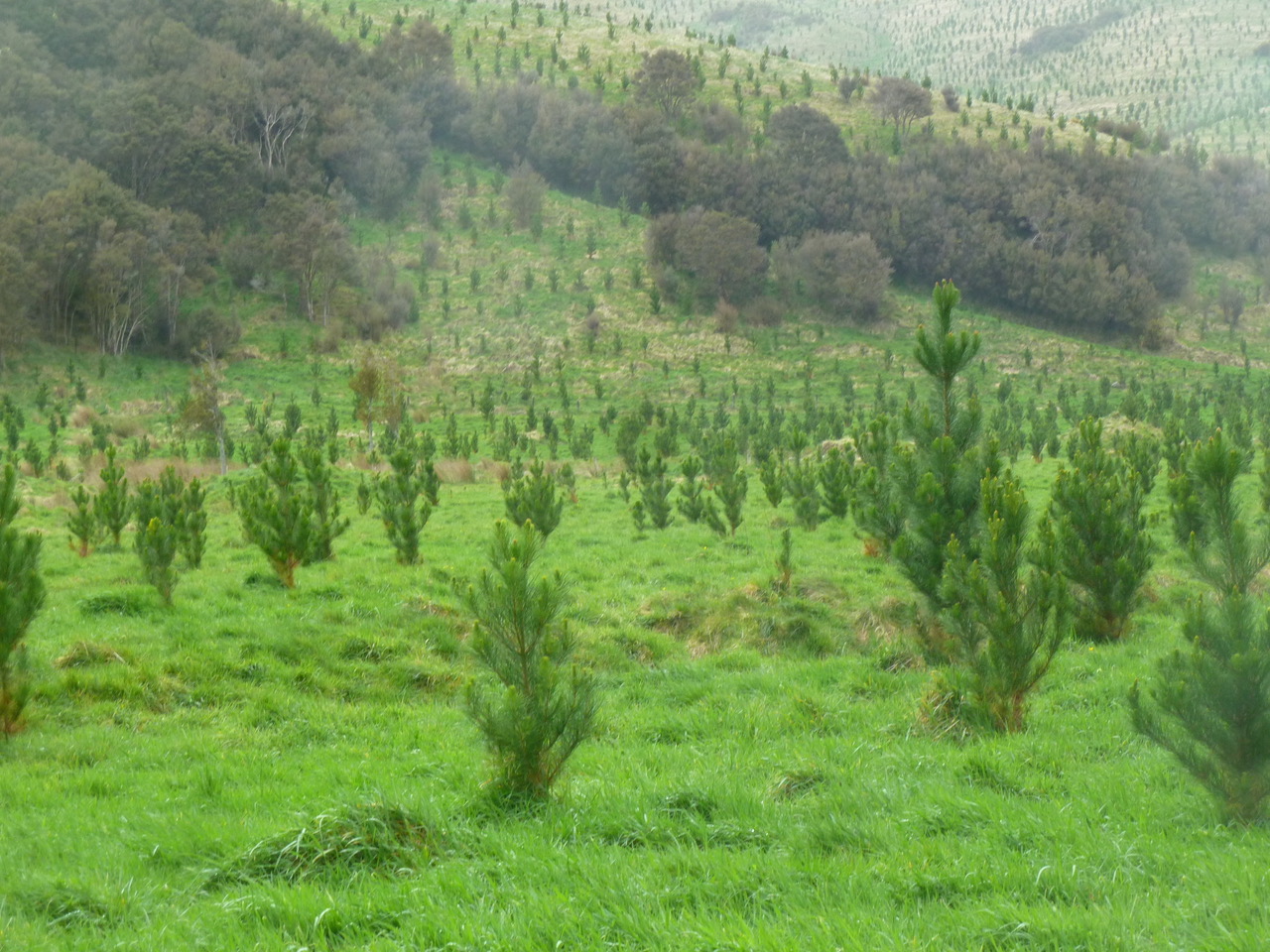
Productive pasture is being converted to ideological carbon pine forests
Radiata pine are fast growing and harvestable in 25 to 30 years. Under the rush by speculators to plant carbon forests, rural communities have been swallowed up and food producing land invaded by hectares of pines. The excuse climate change and carbon offsetting is the agenda behind the pines. Air lines are major polluters. For example, Air NZ has invested by buying farms so far totalling 10,000 hectares, and repurposing them into pine trees.
These trees are grown under the Emissions Trading Scheme and every hectare of pines sequester carbon dioxide on paper, allowing wealthy corporations, many from overseas, to buy credits.
Instead of reducing their emissions they continue to pollute overseas and offset in carbon farming in New Zealand.
Carbon Sponge
The translation of the gobble-de-gook is New Zealand becomes a carbon sponge for global elites, resulting in depopulation of Kiwi rural communities. Pine tree plantations require almost no human labour unlike farming which keeps communities alive.
Carbon Faming forests employ virtually – if not quite – zero.
Forestry empties land which some say aligns with globalist strategies to concentrate people in smart cities and vacate rural zones for future resource control, destruction of food sovereignty, replacing farmland with pine forest which means less domestic food production that forces nations to rely more on global food imports, increasing dependency on centralised supply chains the same ones tied to digital ID, Central Bank Digital Currencies and climate compliance .
Soil and water damage
Radiata pine is thirsty and drain water tables, streams and consequently rivers. Pine trees are high-water consumers with some species said to absorb over 500 litres daily, leading to much reduced stream flows and heavy environmental impact.
Pine forests acidy soil and leave behind sterile land, described as impoverished. Converting it back to farm land with countless stump removals and then restoring natural fertility, is high expensive.
But post harvest needles are highly acidic and suppress native regrowth and after logging, land is often too degraded to be farmed again.
While rural communities decline alarmingly and may even vanish, it also impacts on outdoor active New Zealanders as foreign firms deny access and erect locked gates where once family farms readily granted access for tramping, hunting and fishing and other outdoor recreation.
Environment
It’s been well chronicled that monocultures of pines result in a loss of biodiversity, depletion of natural stream flows, acidification, soil depletion etc., In addition there are two other detrimental consequences, one real the other potential.
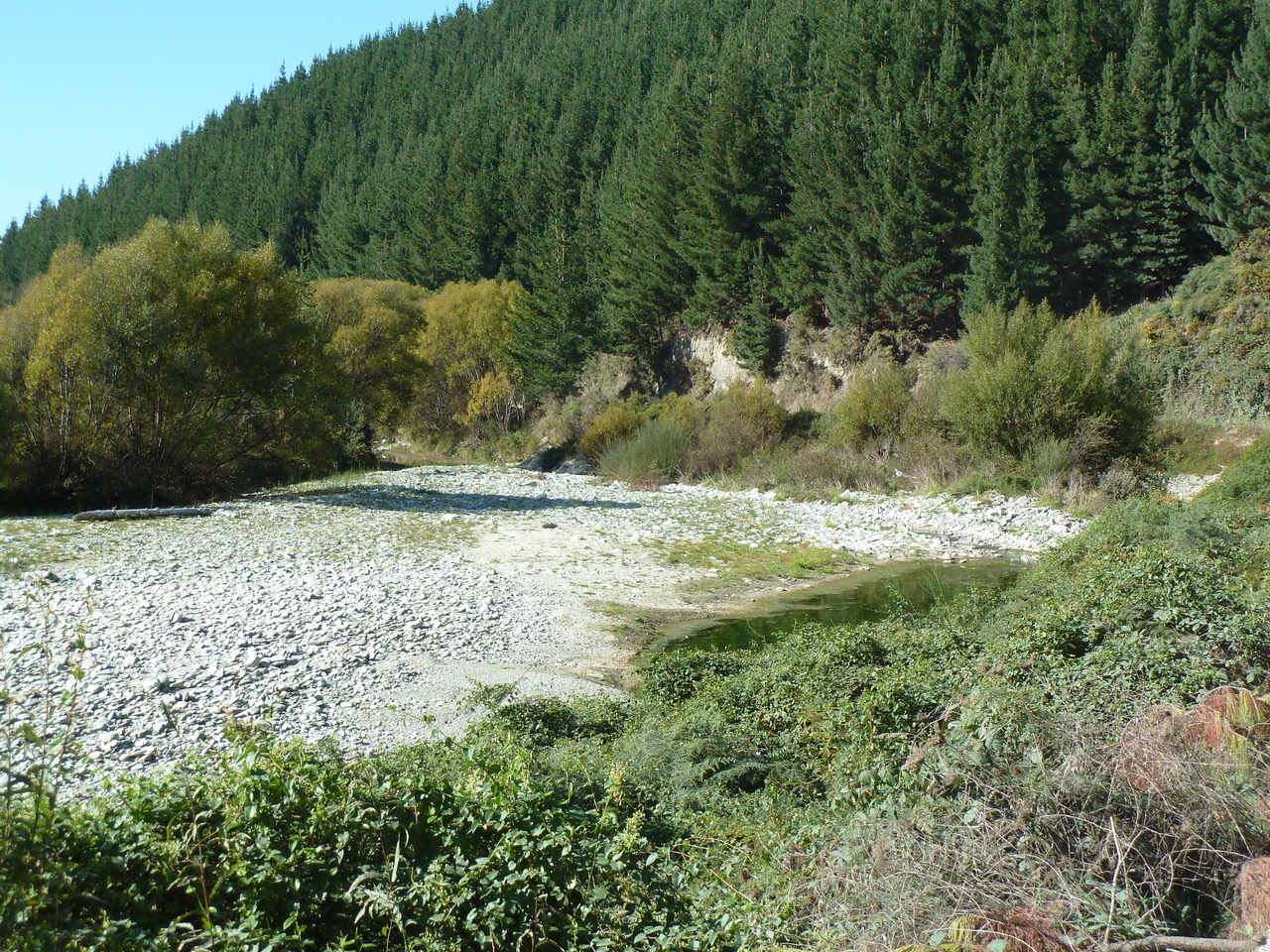
Streams which once flowed all year round have been diminished in size by planting of pine monocultures
Wilding pines have magnified into a major problem. Pine forests particularly those of an unattended, haphazard nature as with carbon farming, are seed banks for wilding pine spread. Wilding pine spread in New Zealand poses a significant economic and ecological threat, with potential costs, it is said, of up to $4.6 billion to $5.3 billion over the next 50 years if left unchecked. The invasive trees currently affect nearly 2 million hectares, with 90,000 hectares added annually, impacting native biodiversity, water catchments, and pastoral land.
The potential for fire hazard is considerable particularly in unmanaged carbon farming forests in dry, drought-prone summers.
Greed of Corporates
Behind the loss of pasture to pine monocultures are multinational timber corporate companies, speculative investors and carbon trading firms, said to be often connected to the World Bank, Black Rock and even Sovereign Wealth funds.
“Greed is paramount – follow the money trail, “ commented one Wairarapa conservationist.
“They are not planting trees to heal the earth, they’re turning land into assets, forestry into currency for trading and Nature into data streams” said another critic.
Final truth is, this isn’t reforestation or any benevolent outlook on the environment.
It’s about money with forests feeding the money merry-go-round and forests feeding the ideological machine.
Watch the land because those who control it, control the future.
Footnote: (1) The latest issue of”Foreign Control Watchdog” (December 2025) of the Campaign Against Foreign Control of Aotearoa (CAFCA) lists Overseas Investment Office decisions on applications for foreigners to invest in New Zealand. Several were for forestry. For example ANZLAFF NZ Ltd were given the go-ahead to acquire 3,182 hectares of land in Otago and Southland. The vendors were multiple NZ forestry entities.
ANZLAFF NZ Ltd., comprises Germany 64%, Australia 21%, Sweden 10% and various 5%, owned by 14 overseas institutional investors.
CAFCA commented “decision-making may increasingly reflect the priorities of foreign investors rather than local environmental, economic or community interests--highlighting ongoing debates around balancing foreign investment, sustainable forestry practices and national interest in New Zealand.”
(2) CAFCA’s e-mail is <cafca@chch.planet.org.nz>
Thank you and in commenting, I note the relationship of four governments – Clark’s Labour, Key’s National, Ardern’s Labour and today’s coalition government to the United Nations and no doubt UN Agenda 2030.
Why doesn’t the government ban the ridiculous practice of carbon forestry?
It’s theoretical ideology, based on a flimsy notion of climate change of global warming.
Climate change is cyclic and naturally occurring. Man may be having an effect on climate but nobody tells us how Man’s effect relates to Nature’s effect by way of natural climate change.
Yes, Man has had a detrimental effect in many ways upon the environment such as pollution, irrigation, forest clearance etc. but as for global warming, I do wonder.
Tobias, I saw this in an article on “Waikanae Watch”.
“To find the true extent of global warming the equation is represented by Natural Climate Change plus or minus Human Induced Climate Change equals the Actual Climate Change.
That “plus or minus” the “natural climate change” is critical to getting the true perspective.”
That makes practical sense.
Appropriate
We haven’t had a governance in NZ that doesnt manage forestry, they promote and encourage pine plantations, but turn a blind eye to forestry emissions, and blame the farming sector as being the number one culprit
I agree with many that the global warming panic was a clever money raping con.
I read an article many years ago, 30 or 40 and can’t remember where but it referred to NZs place in world economy would revolve around tourism, trees and dairy, it would appear that article’s predictions was not far off.
Around each Radiata Pine Forest a “Buffer Zone” of Native Bush should be planted or retained , if already growing there ? This would slow & soak up the water run off , with the moss & fern that grows under it ! & cut down erosion with the deeper rooting Native Tree’s ? Also a crying shame that so many Pine Trees are covering good food producing arable flat/ down land , as NZ is a very Mountainous Country ? & really we don’t have a huge amount of good flat Land & don’t need it wasted in this way .