
What the Cape Brett Track Dispute Means for Outdoor Recreation
Guest Post by John Davey
This recent Stuff article [here] about the Cape Brett Track is easy to dismiss as a colourful local dispute. A private landowner, a diverted route, an argument over $3 per walker. But looked at through an outdoor-recreation lens, it raises much bigger and more uncomfortable questions about public access, private leverage, and the creeping monetisation of the outdoors.
The Cape Brett Track is not a casual stroll. It is an eight-hour, advanced tramping track, clearly described as such by Department of Conservation. Walkers pay $50 for the experience, understand the risks, and are expected to plan for tides, terrain, and weather. None of that is in dispute.
What is troubling is the idea that access can be shaped - or pressured - by private financial interests rather than safety, public interest, or good access design.
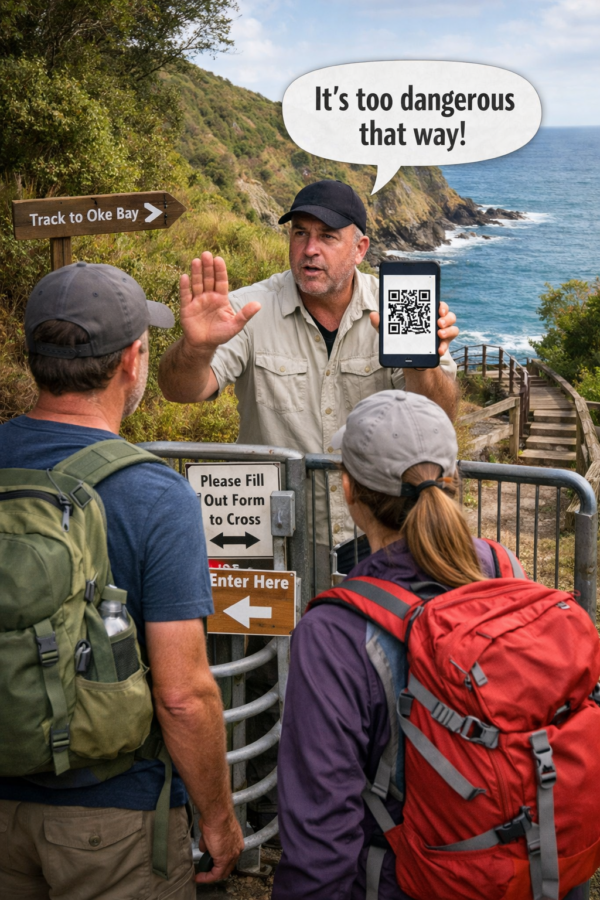
Safety warnings or steering behaviour?
According to the article, trampers following the officially signposted and DOC-described route were intercepted and warned it was “too dangerous,” then encouraged to cross private land instead - via a gate, a QR code, and a data-collection form. That form explicitly framed the choice as rejecting the official route because of danger.
Whether the alternative route is more or less hazardous is almost beside the point. Track safety assessments should be made by track managers and authorities, not enforced ad-hoc at fence lines by interested parties.
When safety messaging is delivered by someone who stands to gain financially from the choice walkers make, it undermines trust - not just in that individual, but in the access system as a whole.
Access by consent, or access by pressure?
New Zealand’s outdoor culture depends on clarity. Walkers need to know:
- where they are allowed to go,
- who manages the track,
- and what risks they are accepting.
Introducing informal tolls, “agreements,” or implied obligations at the point of access blurs those lines. It creates uncertainty for trampers, puts them under pressure at a vulnerable decision point, and risks normalising a model where private landowners can reassert control over public routes by indirect means.
That should concern anyone who cares about long-term access.
The bigger precedent
This case matters not because of one landowner or one track, but because of the precedent it hints at.
If:
- access routes can be contested after the fact,
- financial arrangements can override route decisions,
- and walkers can be redirected through pressure rather than process,
then outdoor access becomes fragile. It stops being a public good and starts to resemble a negotiated transaction - one that favours those with time, money, and legal leverage.
CORANZ has seen this pattern before: access eroded not by formal closure, but by friction, uncertainty, and discouragement.

Advanced tracks are meant to be challenging
DOC is clear that the Cape Brett Track is an advanced tramping track. That designation exists precisely so that walkers understand:
- routes may be steep, exposed, or wet,
- tides and conditions matter,
- and responsibility sits with the tramper.
Reframing that challenge as unacceptable danger - particularly when done selectively - risks undermining the very concept of informed personal responsibility that underpins backcountry access.
Where CORANZ stands
CORANZ supports:
- clear, publicly managed access routes,
- transparent decision-making about track alignment,
- and safety messaging delivered by accountable authorities.
We are deeply sceptical of any situation where access is informally monetised, or where walkers are pressured into particular routes by private interests.
If track alignments need to change, that should happen through open process, proper consultation, and clear communication - not through gate-side persuasion or data harvesting.
The wider question
The Cape Brett situation prompts a simple but important question:
Are New Zealand’s walking tracks public experiences managed in the public interest - or are they becoming negotiable corridors shaped by who can extract value from them?
If we are not careful, the answer will quietly shift.
Access, once lost or compromised, is rarely regained.Bottom of Form