
Queenstown Lakes District Council now says discharging treated wastewater into the Kawarau River is its “only realistic option.”
That phrase should concern anyone who values rivers.
Queenstown did not wake up one morning to discover it had too many visitors, too many subdivisions, too many hotels, too many Airbnb conversions and too few pipes. This trajectory has been visible for decades.
Unbridled expansion has been embraced as economic success. Population growth, tourism growth, property growth - all celebrated. What was not celebrated, or at least not prioritised, was infrastructure sized for that growth.
Wastewater treatment is not a luxury. It is core civic competence.
When a district builds aggressively without matching long-term investment in treatment capacity, storage resilience, redundancy systems and land options, the bill eventually arrives. The Kawarau proposal is that bill.
Now the council argues there are “no realistic alternatives.” But realism is shaped by prior choices. Land-based discharge was always going to be expensive in Queenstown. Land in Queenstown has been expensive for 20 years. That was never a surprise. Deferring acquisition or long-term planning does not make the constraint disappear - it makes the eventual decision harsher.
And this is not uniquely Queenstown.
Wellington’s Moa Point failure exposed similar complacency. Pipes deferred. Upgrades delayed. Risk normalised. Across New Zealand, councils have expanded rate bases and approved developments while quietly under-investing in the unglamorous systems that keep rivers clean.
Ribbon cuttings are easier than sludge ponds.
But here is the central problem: once a river becomes a discharge solution, even with “advanced filtration,” the standard shifts. A 35-year consent is not a temporary fix. It locks in an infrastructure philosophy for a generation.
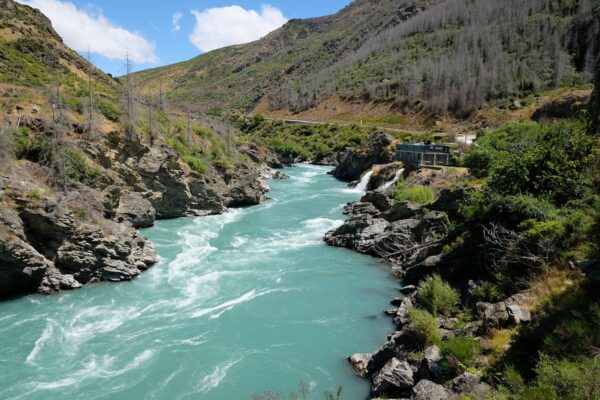
Queenstown trades on “pristine.” Jet boats, clear water, alpine imagery. The Kawarau is not an industrial channel. It is a defining landscape. Calling it pristine while planning to use it as a wastewater recipient creates a credibility gap.
Yes, many places discharge to rivers or sea. That is historically true. It does not make it best practice for the future.
Rivers are not overflow valves for planning failure.
If growth pays for growth, then infrastructure must precede or match expansion - not follow it in crisis mode. This is a governance principle, not an environmental slogan.
Queenstown has been enormously successful economically. That success carries obligation. Wealth districts do not get to claim poverty of options when infrastructure decisions arrive late.
This is about discipline.
It is about long-term civic stewardship.
And it is about whether we treat rivers as assets to be protected first - or as convenient receivers when planning runs out of room.
Infrastructure is not a frill. It is the foundation.
If councils cannot match growth with capacity, then growth itself must be questioned.
That is the harder conversation. But it is the honest one.
I am pleased that you have raised this. Once as an employee of a meat company we were told that the contaminated water supply could not be fixed in less than 3 weeks. We went on strike. 3 days later the problem was fixed. What it takes in Queenstown is just the willingness to get on with it – even if it means short term debt. In some countries the elected officials, and the mayor, would face charges over such a cock-up.
If a farmer discharged sewage into the Kawarau River, he would face extraordinary vicious fines – and rightly so. Why should Queenstown council be any different
And new subdivisions keep on being built before infrastructure sorted out
What’s the betting not one of the Queenstown DC councillors has a house anywhere near the Kawarau river?