
Part Four of a CORANZ series on risk, competence, and access
By Andi Cockroft, Chair, CORANZ
At some point, responsibility stopped being personal and became institutional. Not announced, not debated, but gradually absorbed into process, policy, and paperwork. Where judgement once sat with individuals, it migrated upward - to councils, schools, landowners, managers, and insurers. Along the way, something fundamental changed in how risk is handled.
This article looks at liability culture - not as a legal technicality, but as a force that reshapes access.
The outdoors did not suddenly become more dangerous. What changed was who was expected to carry the risk when something went wrong.
Once, if you slipped, fell, or misjudged conditions, responsibility was largely understood to sit with you. That did not mean help was absent, or compassion withheld, but the expectation of personal judgement was clear. Today, that expectation is far less certain.
If someone is hurt on a track, who is responsible?
If a river floods unexpectedly, who failed in their duty of care?
If a sign was missing, a surface uneven, a condition misunderstood - who should have foreseen it?
These questions no longer sit comfortably with individuals. They sit with institutions.
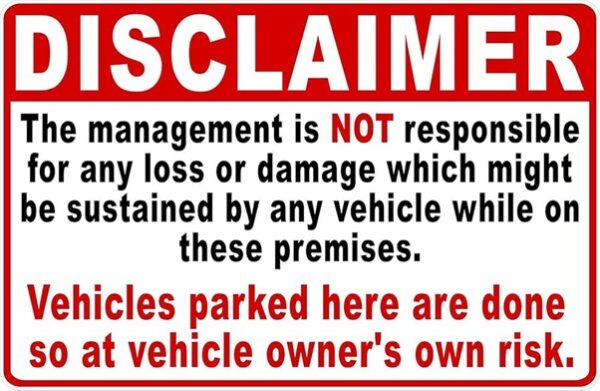
In response, institutions behave predictably. They become defensive. They document. They warn. They restrict. They remove options. Liability culture does not encourage engagement with risk; it encourages distance from it.
This is not because managers are unreasonable. It is because they are rational within the system they inhabit.
If the consequences of an incident are reputational, political, or legal - even without fault - then the safest decision is often the narrowest one. Close the track. Fence the river. Post a sign. Remove the facility. Each action reduces exposure. None builds competence.
When did “duty of care” quietly become “duty to prohibit”?
Liability culture thrives on uncertainty. It does not ask whether people can manage risk, but whether an organisation can defend itself if they don’t. That distinction matters. A river can be swimmable for many and dangerous for some. Liability frameworks struggle with nuance. It is easier to label the river unsafe for everyone.
This is where access begins to erode - not through hostility to recreation, but through aversion to blame.
The outdoors is particularly vulnerable to this mindset because it resists control. Weather shifts. Terrain varies. Conditions change hourly. The more unpredictable the environment, the stronger the impulse to manage risk through exclusion rather than trust.
Trust, after all, is difficult to quantify.
This helps explain the proliferation of signage. “Proceed at your own risk.” “No swimming.” “Dangerous conditions.” “Access closed.” These statements are less about informing users than about insulating decision-makers. They move responsibility outward while simultaneously discouraging use.
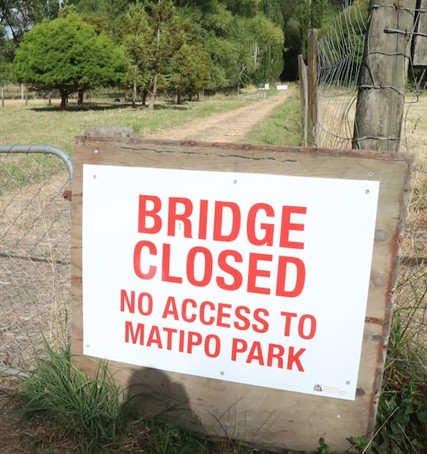
But what happens when responsibility is pushed outward without capability being built inward?
Liability culture also encourages standardisation. Decisions are made not on local knowledge or user competence, but on worst-case scenarios. One incident becomes the benchmark for all future decisions. One complaint reshapes access for everyone.
Is that proportional? Or simply defensible?
There is an irony here. As institutions work harder to avoid responsibility, individuals are trusted less. Yet the same individuals are then expected to take full responsibility for navigating increasingly complex and restricted environments. The result is confusion. People are warned but not taught. Restricted but not supported. Told to assess risk while being systematically discouraged from doing so.
Some will point to no-fault injury compensation as part of this landscape. It would be simplistic to blame it outright. Removing personal litigation had clear social benefits. But it also shifted the centre of gravity. When individuals cannot be sued, responsibility does not disappear - it relocates.
Where does it go?
To the entity with the deepest pockets.
To the organisation with the clearest duty of care.
To the body most visible after the incident.
That reality shapes behaviour. Councils and land managers do not ask “how do we enable safe use?” as often as they ask “how do we minimise exposure?” Those are not the same question.
The effect is cumulative. Each risk assessment nudges access narrower. Each closure sets a precedent. Each warning sign normalises restriction. Over time, the outdoor environment becomes less about participation and more about compliance.
And once that happens, reopening access becomes harder than closing it ever was.
This is not just a legal issue. It is a cultural one. Liability culture signals a lack of trust - not just in people’s behaviour, but in their capacity to learn, adapt, and judge. It assumes that risk is something to be removed by authority rather than navigated by experience.
Yet judgement does not emerge in a vacuum. It is built through use. Through mistakes. Through feedback. When access is constrained, those learning opportunities vanish.
Is it any surprise that people then appear less capable?
From a CORANZ perspective, liability culture matters because it quietly reshapes the outdoors without legislative debate. Tracks are not closed because recreation is unvalued. Rivers are not fenced because swimming is discouraged. Access is lost because risk is redistributed upward - and institutions respond by tightening control.
This series has already looked at skills no longer taught, risk managed instead of learned, and childhood experiences that once built judgement. Liability culture is where those threads converge. When individuals lack competence and institutions fear blame, restriction becomes the default.
The outdoors becomes something to be controlled rather than shared.
The unresolved question is not whether liability should exist. It must. The question is how much trust we are willing to place in people - and what happens when that trust evaporates.
If responsibility always flows upward, will access inevitably flow downward?
If judgement is assumed absent, will restriction always follow?
And if we continue to manage risk by narrowing experience, what kind of outdoor culture are we quietly creating?
In the next article, we will look at how these forces translate into physical change - warning signs, closures, exclusions - and how access can be lost without anyone ever voting for it.
Because the outdoors rarely disappears in one dramatic moment. It recedes by degrees, justified each step of the way.
And by the time we notice, the decision has already been made - not by malice, but by liability.
Whatever happened to personal responsibility?
Health and Safety bureaucracy is utter nonsense. I struck a case where a power lines employee told me he was quitting his job because of Health and Safety red tape where the bureaucrats insisted he had to secure the top of his ladder against a power pole before he climbed up it!
Figure that one out!
I agree it is more than a legal issue. It is also not culture as I understand it. The new order is based on the greed of the billionaire club and their “corporate” culture.