Part Five of a CORANZ series on risk, competence, and access
By Andi Cockroft, Chair, CORANZ
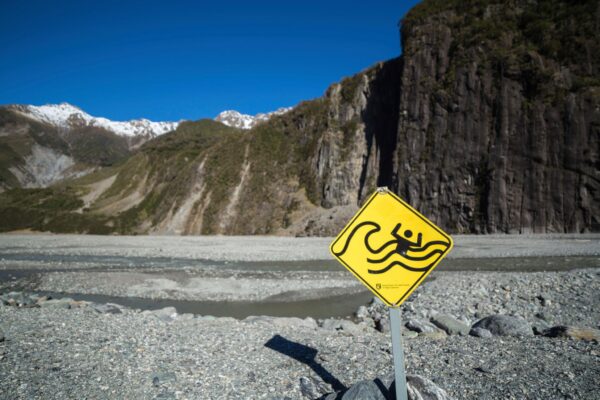
Risk doesn’t just live in policy or paperwork. Eventually, it takes physical form. A fence appears where none existed before. A track is closed “temporarily”. A river access point is removed. A sign goes up warning of danger, liability, or prohibition. Over time, the outdoors itself is reshaped - not by law, but by interpretation.
This article looks at what happens when risk aversion becomes physical, and how broad, defensive interpretations of the Health and Safety at Work Act have translated into lasting changes on the ground.
The Act itself was never intended to close rivers, fence reserves, or discourage recreation. It is principles-based, flexible, and focused on work. Yet in practice, it has been applied far beyond workplaces, into public spaces and recreational settings. Why?
Part of the answer lies in ambiguity. When legislation leaves room for interpretation, organisations tend to choose the most defensible option. And in the context of health and safety, the most defensible option is often not the most enabling one.
If a track is closed, no one can be hurt on it.
If a river is fenced, no one can drown there.
If access is removed, responsibility disappears with it.
At least, that is the logic.
But what happens when this logic becomes routine?
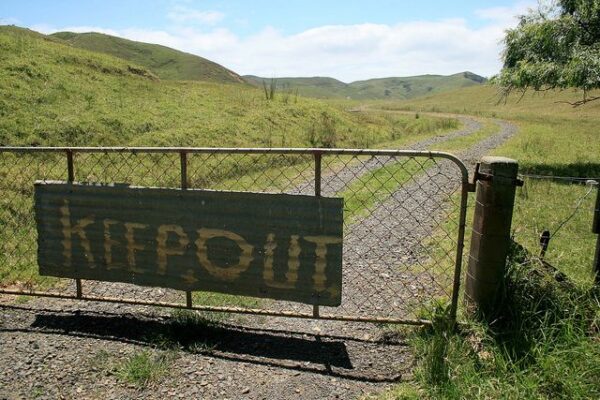
Across New Zealand, we see the same pattern repeated. One incident, one complaint, one near-miss is enough to trigger change. Not review. Not education. Not improved facilities. Instead, closure, redirection, or removal. These changes are rarely dramatic. They are incremental, justified, and often framed as temporary.
Yet “temporary” has a habit of becoming permanent.
Once a fence is built, who argues for its removal?
Once a sign is erected, who takes responsibility for reassessing it?
Once access is blocked, who bears the cost of reopening it?
Physical changes have momentum. They require funding to reverse, justification to undo, and risk to be re-accepted. In most cases, none of those incentives exist.
This is where interpretation of the Health and Safety at Work Act matters more than its text. The Act requires risks to be managed “so far as is reasonably practicable”. But what is considered reasonably practicable when the easiest option is exclusion? When the cost of doing nothing is low, and the cost of enabling access is high?
Is it reasonably practicable to teach people to assess river conditions - or is it easier to post a sign declaring the river unsafe?
Is it reasonably practicable to maintain a track - or to close it pending review?
Is it reasonably practicable to manage behaviour - or to remove the place entirely?
In many cases, the answer chosen has been the latter.
Politicians eventually recognised that this trajectory was a problem. Clarifications and amendments were made to make it clear that landowners and managers were not automatically responsible under health and safety law for injuries arising purely from recreational use. In other words, the law was adjusted to rein in scope creep.
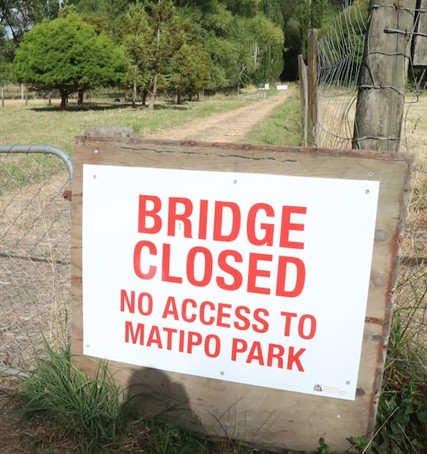
But by the time that happened, much of the physical change had already occurred.
Access points were already gone.
Facilities already removed.
Routes already rerouted.
Signs already normalised.
And critically, there was no requirement - or incentive - to revisit those decisions once the legal context changed.
If liability was the justification for closure, why didn’t clarification trigger reopening?
If health and safety drove removal, why didn’t reassurance lead to restoration?
The answer is uncomfortable: because the law was never the only driver. Fear, habit, and institutional caution had already taken over.
Health and safety frameworks tend to look forward, not backward. They rarely include sunset clauses for restrictions. They do not require reassessment of lost access. Once something is deemed unsafe, the default assumption is that it remains so unless someone is willing to take responsibility for change.
And responsibility, in a liability-sensitive environment, is something organisations avoid.
This is how access is lost without ever being formally “closed”. No vote. No consultation. No announcement. Just a series of small, defensible decisions that accumulate into permanent change.
From an outdoor recreation perspective, the consequences are obvious. Routes become fragmented. Rivers become inaccessible. Spontaneity disappears. Outdoor experiences become channelled, controlled, and conditional.
But there is also a deeper cultural effect. As physical barriers multiply, so do assumptions about capability. If access is fenced, people must be incapable. If swimming is banned, water must be inherently unsafe. If tracks are closed, the public must be untrustworthy.
These assumptions then feed back into policy, justifying further restriction.
It becomes a self-reinforcing loop.
The irony is that many of these changes occur in places that have been used safely for decades. What changed was not the environment, but the tolerance for uncertainty. The outdoors did not suddenly become more hazardous. The appetite for responsibility diminished.
This series has traced that shift from several angles: skills no longer taught, risk managed instead of learned, judgement lost in childhood, responsibility pushed upward, liability culture embedded. Physical change is where all of those forces converge.
It is the point where abstract risk aversion becomes concrete loss.
The difficult question now is whether access, once altered, can ever be restored. Reopening a track requires funding. Removing a fence requires justification. Taking down a sign requires confidence. All of those require an organisation to accept risk again - even when the law says it may do so.
Who is willing to be first?
Until that question is answered, the pattern will continue. Risk will be managed by subtraction. Access will narrow by default. And the outdoors will become something people look at through signs rather than experience directly.
In the next article, we will turn to a related but sensitive issue: how no-fault systems and the removal of personal consequences may have further shifted expectations about responsibility - and what that means for judgement, behaviour, and access.
Because when risk is managed away from both individuals and institutions, it doesn’t disappear. It simply finds new places to surface.
And by then, the fence is already in place.