
What Eel Deaths Tell Us About Catchment Change
Recent reports of hundreds of dead tuna (longfin eels) in Hawke’s Bay streams have been attributed by authorities to a “natural blackwater event.” On the surface, this explanation is scientifically sound. Blackwater events are a recognised ecological phenomenon, occurring when heavy rain washes large volumes of organic material into waterways. As that material decomposes, dissolved oxygen levels plummet, sometimes fatally for fish.
But while the mechanism may be natural, the context in which it now operates is anything but unchanged.
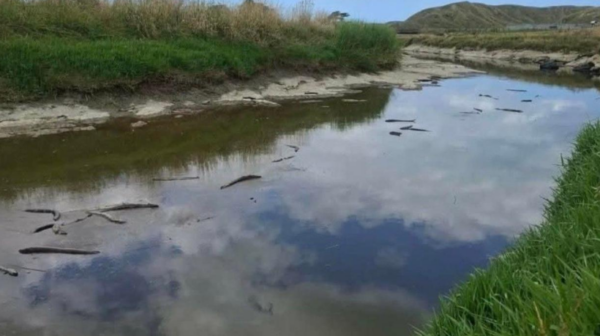
Blackwater events have occurred for millennia. Tuna evolved alongside them. The question is not whether blackwater events happen - it is why they are becoming so severe, so frequent, and so lethal, even to species renowned for their resilience.
A Changed Catchment, a Changed Outcome
Over recent decades, large parts of the Hawke’s Bay and Wairoa catchments have undergone significant land-use change. Pastoral farming, wetland drainage, riparian clearance, and more recently the rapid expansion of plantation forestry - particularly radiata pine - have fundamentally altered how water moves through the landscape.
Plantation forests behave very differently from native forests. Clear-fell harvesting creates large areas of exposed soil. Rainfall that once filtered slowly into the ground now runs off rapidly, carrying with it sediment, fine organic debris, and forestry slash. In flood events, that material is funnelled directly into streams and rivers.
At the same time, the loss of riparian shade raises water temperatures, reducing dissolved oxygen even before any blackwater pulse arrives. Wetlands that once buffered floods and filtered organic matter have been drained or degraded. The result is a freshwater system that is less stable and less resilient than it once was.
Why Tuna Matter
Tuna are not short-lived fish. Many of those lost in the recent event were likely decades old - mature breeding stock essential to population recovery. Losing them is not equivalent to a seasonal fish kill; it represents a loss of accumulated ecological capital.
Tuna survived pre-human Aotearoa through floods, droughts, and natural blackwater events. Their deaths today suggest not merely an unfortunate coincidence of weather, but a system operating closer to its limits.
“Natural” Should Not End the Conversation
Official statements emphasising that no contaminants were found and that the event was natural are factually correct - but incomplete. They risk closing the door on a deeper and more necessary discussion: how land-use decisions influence the severity of natural processes.
Calling an event natural should not absolve us from examining the conditions that magnify its impact. If land-use change has increased organic loading, reduced shading, accelerated runoff, and removed buffers, then these deaths are not merely acts of nature - they are signals of reduced system resilience.
A Catchment-Scale Responsibility
This is not about blame. It is about responsibility at scale.
Forestry, farming, councils, and central government all influence catchment outcomes. Building resilience requires coordinated action: protecting riparian margins, restoring wetlands, managing harvest patterns, and recognising that cumulative effects matter more than individual activities.
If we continue to treat each fish kill as an isolated “natural” event, we miss the opportunity to address the underlying fragility of our freshwater systems.
The real lesson from the eel deaths is not that blackwater events happen - we already knew that. It is that our landscapes no longer absorb them as they once did.
So they sent a rotten eel to Massey for autopsy? Unable to complete a thorough autopsy, Massey suggested water testing would be the only way to determine if toxins were present – things such as 1080, acidity from forestry etc.
But was any of this done? Seems blaming lack of oxygen as a “natural” blackwater event is an easy cop-out to bearing responsibilty for change of use of farmland to forestry.
Blackwater – sounds more like something from Footrot Flats
Clearly the regional council has not hold over those who extract so much water the river dies. Too bad if a farm dog or stock drink it.
Mass eel deaths of this nature are more likely to be the result of direct contaminant discharges or secondary poisoning from 1080 or brodificoum/anticoagulants. Eels are very resilient to low-oxygen conditions, so the “events” would have to be simultaneously extreme to get eel deaths of this nature across multiple catchments. Hardly likely.
Agree with postman Pat. Eels are resilient and can exist in damp mud with no water.
It has to be some toxic contaminant.
Where has NZ got to with freshwater. Once you could cup your hand in a river and drink the water, but not today.
Politicians at central and local level, you’ve let the public down and left a disgraceful legacy for future generations.
It makes me so angry, fools like National’s former Environment Minister Nick Smith who denied rivers were polluted.