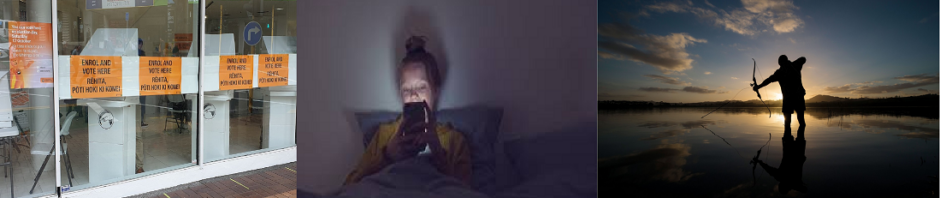
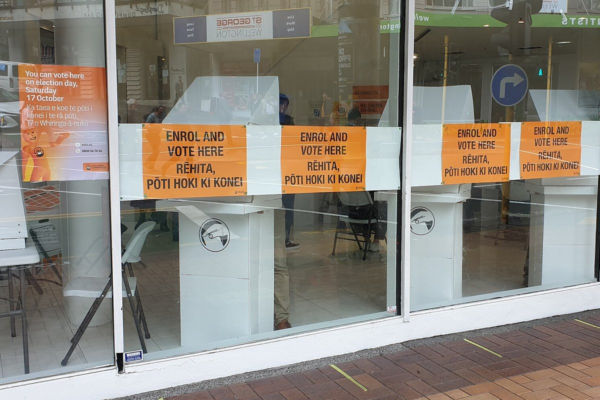
Participation in community life has not simply declined in isolated areas; it has shifted across a wide range of everyday behaviours. Lower voter turnout, reduced volunteering, and declining involvement in clubs sit alongside less formal signs: young people disengaging from school, gathering without purpose in public spaces, or drifting into low-level offending such as shoplifting or vehicle theft. These are not identical issues, but they point in the same direction. Participation is no longer the default.
This pattern has been observed before. Research into social cohesion, including work by Robert D. Putnam, identified links between reduced social connection and lower engagement in civic and community life. At the time, these were described as short- to medium-term effects. Nearly two decades on, the conditions have not settled. If anything, the environment in which participation occurs has become more complex, and disengagement more visible.
Disconnection is not abstract. It is experienced in how people relate to those around them. Many now interact more through digital spaces than physical ones, and public discourse is more fragmented and less predictable. Shared assumptions cannot be relied upon, and common ground is less obvious in everyday settings. Where people are uncertain of expectations, or unsure whether they belong, participation becomes a deliberate step rather than a natural one.
That shift has practical consequences. People are less likely to join groups they do not understand, less likely to volunteer where expectations are unclear, and less likely to engage in activities that appear closed or unfamiliar. In that space, disengagement can be passive, through withdrawal, or active, where time and energy are redirected into less constructive outlets. The issue is not simply opportunity, but confidence.

Addressing this does not require large-scale intervention or complex programmes. Participation increases where expectations are simple, where first steps are visible, and where inclusion is immediate. Activities that offer clear invitation and low barriers to entry tend to sustain engagement more effectively than those requiring prior knowledge or commitment. The principle is straightforward: people are more likely to take part in what they can see and understand.
Local, practical actions remain effective. Open access events, visible entry points through community boards and local networks, and beginner-friendly introductions reduce uncertainty. Shared experiences, particularly in outdoor settings, provide neutral ground where participation does not depend on background or prior involvement. These approaches do not resolve every aspect of disconnection, but they address it where it is most directly felt.

The issue is not whether people are willing to participate. It is whether participation is presented in a way that feels accessible, familiar, and worth stepping into.