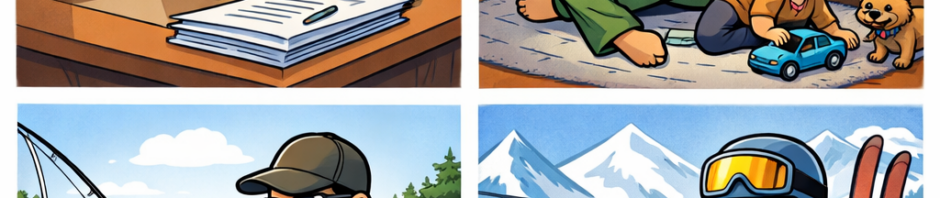
Perhaps The Outdoors Should Notice.
Guest Post by Dave Rhodes
Recent reporting suggests working from home is not retreating in New Zealand. It is becoming embedded in parts of the workforce.
That shift is usually discussed as a productivity or workplace issue. It is also a recreation and land-use issue.
When daily routines change, patterns of movement change. When patterns of movement change, pressure on public land and water changes.
Outdoor recreation should pay attention.

Recreation Is No Longer Weekend-Bound
For decades, participation followed a predictable rhythm. The working week built pressure. The weekend released it.
Flexible work alters that pattern.
Midweek tramping is more common. Dawn fishing before logging in is easier. Afternoon walks replace commuting time. Regional stays spread across the week rather than concentrating into peak holiday bursts.
Distributed use can be positive. It may ease weekend congestion at boat ramps, huts and popular tracks.
But planning assumptions must adjust. If recreation becomes year-round rather than peak-season, infrastructure design and maintenance cycles must reflect that reality.
Access matters. Durability matters as well.
Local Green Space Becomes Daily Infrastructure
When people spend more time near home, nearby rivers, forests and coastlines become part of everyday life.
These are not occasional leisure assets. They become daily wellbeing infrastructure.
That strengthens the case for:
- Protecting river margins from incremental loss.
- Defending walking access at the urban-rural fringe.
- Maintaining public rights-of-way before they quietly narrow.
Public resource, public responsibility.
Flexible work also enables relocation to smaller towns and coastal communities. That can revitalise local economies. It can also increase subdivision pressure in precisely the landscapes outdoor recreation depends upon.
Planning frameworks need to anticipate that.
Legislation outlives Ministers. Development decisions shape access for decades.
Participation Could Deepen
There is genuine opportunity here.
More time at home can mean more time outside. Regular midweek use builds familiarity. Familiarity builds skill. Skill builds stewardship.
A hunter who knows a local block intimately manages risk better.
An angler who fishes a river weekly understands its flows.
A tramper who walks a track often reads its changes.
Competence grows with repetition.
Outdoor culture strengthens when recreation becomes routine rather than episodic.
Regulation should not replace competence. It should support it.
Avoid the Wrong Response
Increased use can prompt calls for tighter controls - permits, blanket closures, precautionary restrictions.
Safety matters. Ecological limits are non-negotiable.
But proportionate response is essential.
Blanket restrictions imposed without clear evidence risk weakening personal responsibility and eroding public trust. The durable response to increased participation is not reflexive limitation. It is:
- Clear hazard information.
- Robust infrastructure where appropriate.
- Enforcement where genuine damage occurs.
- Education that builds capability.
Risk cannot be eliminated, only managed.
Settlement Patterns and Environmental Pressure
If flexible work continues to enable movement into rural and coastal areas, pressure on waterways, tracks and margins will follow.
This is not a political point. It is a structural one.
More people living near sensitive catchments increases cumulative impact. River health must remain the first consideration in planning decisions.
Limits before tools.
Evidence before emotion.
Site-specific realities matter.
Outdoor recreation depends on ecological integrity. Without healthy rivers, forests and coasts, access becomes symbolic rather than real.
A Moment of Cultural Choice
Working from home is often framed as a lifestyle convenience. It may prove to be a cultural inflection point.
Handled well, it could:
- Spread recreation pressure more evenly.
- Deepen public connection to local landscapes.
- Strengthen stewardship across all sporting codes - fishing, tramping, hunting, camping, boating and more.
Handled poorly, it could:
- Accelerate incremental access loss.
- Encourage development in fragile locations.
- Trigger heavy-handed regulation in response to unmanaged pressure.
The direction is not predetermined.
Outdoor communities have long valued self-reliance, preparation and respect for place. That culture is an asset.
The laptop may sit at home. The responsibility outdoors remains the same.
Access matters.
Competence matters.
Rivers come first.