
Opinion by Tony Orman
Democracy is under siege from politicians and is involved in every facet of our lives, even the environment – and even fishing and hunting

Democracy is dying, in case you haven’t noticed.
It’s exemplified by governments’ – note plural – increasing use of by-passing the select committee process.
Select Committees comprising Members of Parliament sit and listen – or are meant to listen – to members of the public giving their opinion on proposed law.
So what has a perceived erosion of democracy got to do with the outdoors and environment and even down to fishing and hunting?
The answer is everything – so read on.
In 2017 former prime minister Sir Geoffrey Palmer wrote a startling blog post expressing concern about the state of democracy in New Zealand.
It surely should have been headline news but it wasn’t. Which raises a large question marks about the media’s competency and sense of responsibility. But I digress.
Geoffrey Palmer’s statement was aimed at a National government, led by John Key.
Geoffrey Palmer had very good reason to be concerned for various issues around the National government led by ex-money trader John Key.
Among a number, one action by the government was totally unprecedented.
Almost eleven years ago, on April Fool’s day 2010, Nick Smith, then minister for the environment and government by pushing the ECan Act through Parliament, sacked the democratically elected Environment Canterbury (ECan) council and installed hand-picked sycophantic state commissioners.
Outraged
The move outraged the Law Society Rule of Law Committee which denounced the ECan Act as repugnant to the “Rule of Law”. Most were appalled.
But it went through pushed by National’s Nick Smith.
Involved was ECan’s failure to protect the integrity of the Water Conservation Order (WCO) protection, akin to a National Parks status, applying to rivers such as the Rangitata and Rakaia, both notable public salmon and trout fisheries.
The erosion of democracy underlies every issue – and the outdoors is no exception.
For example, in April 2016 Nick Smith was at his dictatorial best when he removed the right of local councils to consider and hear submissions on 1080 poison aerial drops and put the final and only say with himself as minister. The public’s democratic right to input was abolished.
The point is the merits or demerits of 1080 isn’t the issue.
The alarming aspect was the undemocratic way in which a dictatorial measure was installed rendering the public mute.
I can recall making submissions on trout farming in the early 1970s where I was allowed to speak for an hour and then answer questions from MPs for half an hour. I made submissions to other Select Committees. To the Maori Fisheries Bill 1990 I was granted over an hour. In the same year 1990 to the Conservation Law Reform Bill almost an hour.
Full Steam Ahead
But the erosion of democracy was already underway and gathering pace.
In 2004 the government’s ERMA review of 1080 was a “kangaroo court” with the vast majority of submitters restricted to only five minutes. It was a token gesture to consultation – lip service only.
The two big poison spreaders DOC and OSPRI had requested the review. That was a pointer to it being a farce. Not surprisingly the ERMA review in 1080 gave the poison the green light even before all public submissions had been heard.
The Council of Outdoor Recreation Associations of New Zealand (CORANZ) expressed deep concern at the time, that parliament’s select committee democratic process was being undermined at the expense of the public giving submissions.
CORANZ Chairman Andi Cockroft made an oral submission to a select committee dealing with the Resource Management Act (RMA).
After being beforehand, granted 15 minutes speaking time the chairman Labour’s Duncan Webb interrupted Andi Cockroft’s submission after five minutes and said the committee had heard enough thereby cutting the oral presentation short by ten minutes. Duncan Webb should have known better. He is a lawyer.
It was an insult to CORANZ – and to democracy.
MPs are Public Servants
Usually not acknowledged is that MPs are really public servants voted in to serve the public and the public interest.
Calling our Prime Minister our leader is a misnomer. National’s John Key and Bill English, Labour’s Jacinda Adern and Chris Hipkins and the current PM Christopher Luxon were each simply the most senior public servant in NZ.
The National government was voted out in 2017.
But the new coalition government of Labour continued the government trend of diminishing democracy.
Firearm law changes following the Christchurch March 15, 2019 mosque tragedy, were rushed through in just a few days. Over 12,000 submissions were considered in just two days – defying credibility and integrity.
The hasty clumsy law targeted law abiding, firearm owning citizens. Criminals and gangs invariably with no firearm licence yet possessing illegal firearms, were ignored.
Also ignored was the blatant, incompetent way in which the offender an Australian terrorist, obtained his firearm licence, despite glaring inadequacies in his application.
Arrogance
The current coalition government has been brazen to the extent of arrogance with its Fast Track Approval Act bypassing the select committee process. But it was nothing new in considering the last 50 or so years. After all in the late 1980s, the 4th Labour government known as Rogernomics, sold public assets at heavily discounted rates, to corporate friends without any consultation with the owners, the people.
Since Rogernomics, the tendency to skip public input has characterised governments and increasingly so to the present day.
All governments of the last 50 years or so, have been guilty.
Back in 2011 a Victoria University study revealed that urgency motions were conducted 230 times on more than 1600 bills from 1987 (a year of a Labour Government) through to 2010 (a year of a National government). Staggeringly, over half the bills introduced to Parliament during that time were accorded urgency at least once in their enactment process.
The Victoria University study pointed to a lack of justification, as another critical element of concern.
Unjustified
“Reasons given for issuing the motion were consistently dubious and vague in their nature and, although valid motives cropped up sporadically, it was evident that a significant number of urgency motions passed were based on either freeing up the order paper or, occasionally, an element of something more sinister.”
According to one source, an analysis of parliamentary records, shows in the first term of John Key’s National government (2008–2011) there was “a high, and at the time, notable use of urgency, which often bypassed the select committee stage to pass legislation quickly”.
“During the Ardern/ Hipkins-led Labour government (2017–2023), urgent parliamentary procedures were used to pass legislation bypassing or shortening standard select committee, enabling swift action on urgent matters. Significant examples included bypassing select committee scrutiny for parts of the Three Waters legislation and, in 2022, passing 24 bills under urgency, with several skipping the public submission process.”
Deliberate Euthanasia?
There was no pause in the quiet euthanasia of intentionally ending the life of ailing democracy with a change of government in 2023.
“The same National-led coalition government in New Zealand significantly increased the mis-use of urgency to pass legislation without select committee scrutiny, with over 30 bills bypassing this stage in the 2023–2025 term.”
The “urgency” motion is an extremely powerful mechanism at the hands of Parliament. Bills moved under it may be rushed through up to all stages in just a couple of days. Not only are extra-sitting hours permitted, but critical periods of consultation such as the select committee can be completely side-stepped.
This means that chances for public input are extinguished and time for reflection and review by law experts is extremely difficult to the point of being impossible.
Misuse of “urgency” motions is nothing new in New Zealand’s Parliament. However “urgency” is a dangerous tool very vulnerable to hard nosed politicians who have little or no respect for the people and the public’s democratic rights.
The zeal of sitting government should never trump the importance of proper parliamentary and public scrutiny.
This year is election year.
The erosion of democracy should be a key issue.
Footnote: Tony Orman has served on fish and game councils for 30 years and is a former president of the NZ Recreational Fishing Council, CORANZ and NZ Federation of Freshwater Anglers.
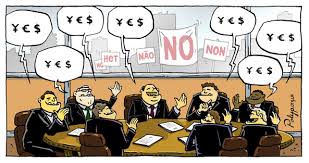
Select Committee deliberating?
Dictatorships are a one-way street, democracy is two-way traffic.
Since 1984 and Roger Douglas with his Rogernomics dictatorship, democracy has been on a slippery slope. I note Geoffrey Palmer quoted in the very good article. He was a senior minister in the 4th Labour government’s “Rogernomics” movement. He got rid of “quangos” which included the very good Nature Conservation Council. Is Palmer being hypocritical or wise in hindsight?
You cannot ignore politics if you care about society, the environment and the hunting and fishing, indeed outdoors generally.
There’s a quote which goes like “Man’s capacity for justice makes democracy possible, but man’s inclination to injustice makes democracy necessary.”
I’m a recreational sea fisherman. Fishing is also political because it involves many people, around over one million New Zealanders fish. The current Minister of Oceans and fisheries is a shocker with no regard for the people’s views. He was wedded to the commercial corporate sector. Still is too.
So let’s ask/demand what the political parties’ views are on recreational fishing – and injustices meted out to the recreational fishing public and the favouritism towards the corporate companies.
Both the New Zealand Federation of Freshwater Anglers and the New Zealand Salmon Anglers Association were denied their request(s) to make oral submissions on the Planning and Natural Environment Acts.
With the clause specifically requiring the protection of the habitat for trout and salmon exempt from the (RMA) replacement Acts, it seems this coalition government is using its sovereign powers to exclude “front line freshwater advocates” from the process.
It is important that anglers remember this snub on 7th November 2026.
Say no more
Swiss style binding referenda seems to have worked well for them… time for a Kiwi version?
Since returning to New Zealand after 14 years in Australia I’ve increasingly felt that we should be campaigning for the Swiss referenda system this contributor suggests. As far as I can see not one political party mentions it.
Governments change. Legislation endures. That is precisely why process and public input deserve respect, regardless of who sits on the Treasury benches. Strong democracy benefits everyone.
Many long-serving advocates remember when submissions were robust, lengthy and genuinely engaged with. That institutional memory is valuable. Losing it would be a loss not just for recreation groups, but for New Zealand’s civic culture.
Select committees are meant to listen. Listening has become optional, and we should all pause. Democracy works best when it feels like two-way traffic, not a one-lane expressway.
The most concerning aspect is not which party used urgency, but how normal it has become. When shortcuts become routine, public trust erodes quietly. That is something no government should be comfortable with.
Those of us who fish, hunt and spend time outdoors understand that decisions made in Wellington eventually land in our rivers, forests and access rights. Process matters enourmously because outcomes matter. Democracy is not simply abstract - it shapes the ground we stand on.
A timely reminder that democratic process is not simply a procedural inconvenience - it is the real safeguard that protects all of us, regardless of our individual political preference. Healthy public scrutiny strengthens legislation. It does not weaken it.
We are talking about every Kiwis back yards we’re talking about here,
I believe now, that politicians rely on the narrow minded thinking Kiwis who if ever they protest, its generally in there own little back yard, the recent beach mining comes to mind.
For decades there have been fighting for the environment, plenty enjoying it but very few willing to fight the greed and corruption that are happy to destroy it.
For sure N.Z. should take a Leaf out of the WELSH Parliament ? Where an M.P. gets the SACK for telling Lies ! Can we please copy the Welsh Legislation ? .
Having some Welsh heritage I applaud the Welsh parliament for making a move towards honesty in MPs.
According to the report I read they proposed making lying illegal during election campaigns. One MP was reported as objecting because it would hinder debate!
I’ve not seen anything further reported. Perhaps the media have been told to keep quiet about it?
Replying to Anna Wilcox.
You say “public trust erodes quietly. That is something no government should be comfortable with.”
To the contrary, politicians don;’t want public scrutiny. If the people become disinterested and consumed by apathy, then it lessens the checks and balances and accountability for politicians.”
Governments with the likes of Shane Jones and Chris Bishop can just steam ahead, full pace, unchecked with exploitation of natural resouces for the interest of their corprate bed-fellows.
An ancient Greek fellow by the name of Plato said “the price of apathy is to be ruled by evil men.”
I agree with this
Death by a thousand paper cuts. The current Fisheries Act Amendment proposals process could well become another example of democracy being trampled.
If the Select Committee behaved like they did the last time this crap was regurgitated in 2022 we are in trouble. Thank you David Parker for your courage to deal to the nonsence with your Supplementary order Paper days before the Third Reading
Thank you Tony Orman for being so determined and strong
Up to us to encourage everyone around us to take the time to vote this November. Our vote and who ends up making decisions form 2027 onwards will impact the next generations, so all of us need to get up and get talking now. Democracy needs people. People need democracy.
Democracy is dead Tony. When the people speak in large numbers like they did during the covid scam politicians should listen. In New Zealand politicians speak and demand the people listen. That is not democracy
Democracy is under attack. In the fisheries space, we are seeing our public resources being privatised by stealth. Death by 1000 paper cuts.