
The Campaign Against Foreign Control of Aotearoa (CAFCA) says the extreme weather that has hammered the country so far this year has laid bare the “dirty deal” that transnational corporations have cut with New Zealand Inc.
Forestry and other largely foreign-owned extractive industries readily reap profits when the sun shines, but they leave councils and taxpayers to pay the cost of cleaning up the mess when things go wrong. It’s called privatising the profits whilst socialising the costs.
This is a typical case of corporate welfare, where companies’ profits are private but the public bears much of the cost when they face losses.
Now they are lobbying the Coalition Government to ensure they are not held liable when their debris causes environmental destruction.
CAFCA secretary Murray Horton says the problem is most acute in Tairāwhiti (Gisborne). As climate change generates more frequent cyclones, it is now common to see beaches, bridges, roads and homes swamped with slash and sediment from commercial forestry.
“Many of the major forestry businesses operating in and around Tairāwhiti are foreign companies that ship logs overseas for processing. They contribute little or nothing to the economy through value-adding industries,” Mr Horton says.
Cut Costs
“Their aim is simply to produce logs as cheaply as possible. They have de-unionised the workforce and forced workers to become contractors or subcontractors. The upshot of this is that forestry is one of the most dangerous industries in the country and has far more fatalities than any other sector”.
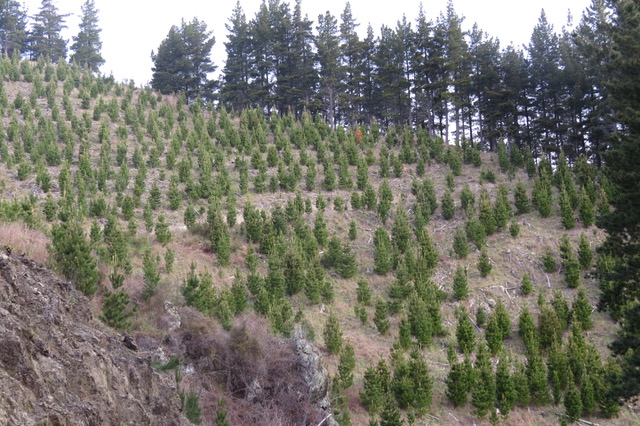
“To cut cost they rely on clear cutting, often on unsuitable land that is very steep or unstable. This is the inevitable source of the avalanche of the slash that washes down onto farms, beaches and communities during big storms”.
Repeatedly clearing this forestry debris is a serious financial burden. The long-term clean-up costs for Cyclone Gabrielle alone exceeded $1.2 billion.
Government Plays Ball
Mr Horton says the Government is now making it easier for forestry companies to duck their responsibilities for this environmental destruction.
“Stuff has reported that, as the Gisborne District Council has begun to make forestry companies get resource consents to release slash, they have sought protection from the Government. They want a legal framework that says they will not be held accountable when there is a major deluge of slash”.
Manu Caddie is a spokesperson for the environmental group Mana Taiao Tairāwhiti and a frequent contributor to CAFCA’s publicationForeign Control Watchdog.
Corporate Foreigners
In an article for the forthcoming April issue of Watchdog, Mr Caddie writes that companies based in Malaysia, Australia, Japan and China run some of the largest forestry operations in Tairāwhiti. They export most of their logs to Asia.
He says material released through official information requests reveals that forestry representatives want concessions and subsidies before they will support a land-use transition programme that the Tairāwhiti district council wants to implement in order to reduce the environmental harm forestry causes.
“These conditions reportedly included limiting any restrictions on clear-felling, compensation for potential losses, and giving the forestry industry significant control over transition funding”.
Offshore Flow
“This means communities downstream from these forestry operations will still face the recurring cost of damaged infrastructure and disrupted livelihoods, while much of the financial return flows offshore to institutional investors.”
Mr Caddie says this raises the larger issue as to whether corporate interests are attempting to dilute a process designed to benefit the public and the environment. The issue is no longer simply about forestry, but about democratic accountability and who gets to shape decisions about land-use when the economic stakes are high.
Corporate power and control!
Yes, correct and governments toady to the corporates, often offshore and ignore the public interest and environment.
The environmental damage is enormous from slash littering farms and river beds, ruining rural communities, wilding pine spread, thirsty pines denuding stream flows, acidic runoff resulting in lower stream invertebrate counts (less trout food), loss of biodiversity with monocultures, silt runoff with logging, and more.
Corporates should pay their way and pay for damage caused.
Well said CAFCA.
Do you really expect Overseas Investors to be concerned about New Zealanders or the environments they live in?
The single purpose of a entity is to maximize profits
We have a government that worships overseas investors like Catholics worship the Pope – it treats them as divine beings. We have to ensure that they wake up via the ballot box and constant pressure.
And there’s the wilding pines, loss of rivers water, acidity and habitat. Where’s Fish and Game in all this – aren’t they meant to look after habitat so the trout/salmon and other aquatic life can thrive – or survive!
New Zealand has ABSOLUTELY got rocks in its head.
In our modern democracy, Politicians ABSOLUTELY forget their place.
We vote them in to GOVERN our country in accordance with what is in the BEST INTERESTS of New Zealand AND ITS PEOPLE, in the LONG TERM.
Their notion they LEAD our country is SELF-APPOINTED.
We call them our GOVERNMENT .. not our LEADERSHIP.
Our Prime Minister is the HEAD OF OUR GOVERNMENT, not the LEADER of our country.
Hard-working, grass roots, rank-and-file, salt-of the earth, tax-paying New Zealanders DO NOT SUPPORT foreign ownership of our land.
All this has ever done .. is push up property prices for New Zealanders .. and make property ownership more unreachable, for far too many people.
Yes, lease land to offshore interests, by all means.
But this must be done with RESTRICTIONS that benefit New Zealand, and New Zealanders.
And such restrictions must be RIGIDLY ENFORCED.
I remember when Winston Peters told us an analysis had been done of previous OIO Approvals .. and New Zealand had been promised 7 state-of the-art new timber processing mills .. NONE of which had been built.
Changing land use .. eg from farming to forestry .. should require special permission, and require special conditions to be met.
Why are we allowing foreigners to plant weeds (pine trees) .. ruining our rural landscapes .. creating detrimental environmental impacts .. creating huge risks and liabilities (wilding pines, and post-flood cleanups) .. so they can claim carbon tax credits, or offsets, or whatever else it is they do?
They must think WE ARE STUPID (which may not be too far from the truth .. we sure do ACT STUPID, at times …
IT’s BLOODY NUTS.
Yes so correct Stewart about the PM not being NZ’s leader but head of government, elected to serve the people, not dictate to the people.
As for the forestry industry it is dominated by off shore corporates.
Approximately 70% to 75% of New Zealand’s forestry plantation estate is under some form of foreign ownership or control. Foreign-owned entities dominate the sector, with 6 of the 10 largest private landowners in NZ being foreign forestry companies.
Here’s what AI says of corporatism – “Corporatism is a political and economic system where the state recognises, organises, and partners with major interest groups (corporations, labor unions, agricultural, and professional associations) to manage the economy, often leading to a “third way” between capitalism and socialism. It is criticised for fostering crony capitalism, stifling competition, increasing inequality, and reducing democratic accountability by prioritising established, elite interests over the public good.”
That’s it down to a T.
Corporates don’t care about the environment, the publicc interest – corporates just want to maximise propfits which invariably they take off-shore.
Forestry reeks of foreign corporates. 75% foreign owned I see above.
My question is to Corina, what are you doing about this, we have an election soon, are you going to take this to the public in the hope of opening as many eyes as you can, and insure that any and all environmental damage is will still be a crime, are you going to make your voice heard Corina.
Peter Bragg
Corporates don’t give a damn about Kiwi people. Inevitably and almost without exception, they erect locked gates and deny access to outdoors active Kiwis whereas when it was a NZ family farm, in most cases, access was willingly given.
Pines are thirsty devils.
Pine trees typically require significant water for transpiration-ranging from 10 to 150 gallons per day for large, mature trees.
Is it any wonder that once plantations of pine trees (thousands of trees) are established stream flows decrease and dwindle to a trickle and even dry up. These are streams, once fine fly fishing streams and important spawning streams.
Well Fish and Game do you care?