
Book Review
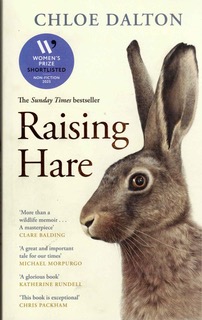
“Raising Hare’ by Chloe Dalton published by Canongate Books UK, NZ distributors Allen and Unwin. Price $27.99. Reviewed by Tony Orman
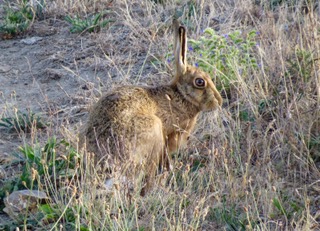
I’ve always admired the hare, often encountering it while in the hills, up a river or even driving a country road where often a hare will athletically stretch out, to race ahead down the road before arcing off and across an adjoining paddock.
So I looked forward to delving into this book.
I was not disappointed because it is one superb book, being a heartwarming account of a UK city-dwelling professional Chloe Dalton who at her country residence finds a newly born leveret (i.e. hare), orphaned through unknown circumstances. She sets about nurturing and feeding it and raising it to adulthood. Along the way, a deep bond between the young hare and the author develops.
Her account is beautifully and sensitively written and the author admits that there were personal positive impacts from the relationship.
“Living side by side with the leveret changed me in other unexpected ways. Before the leveret came into my life, I had put work ahead of almost every commitment.”
In short author Chloe Dalton was a candidate for “burnout.”
She admits beneath the dedication to her demanding work environment “was a temperament that longed for quieter, more gentle rhythms —The leveret worked upon my character soundlessly and wordlessly, easing some of the nervous tension and impatience.”
Raising the hare became an experience of self discovery, personal reinventing plus an awareness of the natural world and its creatures blossomed.
From the start, Chloe Dalton found the leveret soothed her. She found herself slipping away from her work desk just to look at it, amazed by its calmness and demeanour.
“I couldn’t help but compare its serenity and steadiness to the sense of frenetic activity that had pervaded my life for years, marked by constant vigilance, unpredictability and stress.”
The author writes in an easy flowing style and with a candour that made her ponder and challenge the value assessment of the hare in the eyes of society generally. In the UK, some seventeen large estates run organised hare shoots . Whereas pheasants are protected by a statutory shooting season, hares are not.
Hares can be shot at any time of the year in England and Wales. And for that matter, in New Zealand too. “People who justify the killing of hares often describe them as pests,” she rues. Nevertheless the label of pest even if wrong does not justify ignoring animal welfare.
“It seems incomprehensible to me that hares should not be shielded from hunting during the period they nurse their young – since orphaned leverets starve to death without their mothers.”
She reflects further saying “the word pest has carried the connotation of a thing --that is a scourge or nuisance--something that it is meritorious to eliminate -hence pest control - I have come to know and love a creature that for now is placed lower down the scale of animals we instinctively value; lower than the dog, lower than the deer or pheasant and in the eyes some, a mere pest.”
Deeper, the experience of hare raising increased her awareness and understanding of the greater ecosystem of which humans are just one part.
“The hare is a symbol of the wild that remains -- and of infinite beauty and mystery”. She concludes “I dare hope, lies the possibility of renewal; a vision of life and land as wild and free as the hare, for them and for us all.”
This is an extraordinarily beautiful book, gracefully and sensitively written with an undeniable underlying subtle message for societies to be more respectful of Nature, her creatures and the ecosystem.
In fact it’s a “cracker” ideal for a Christmas gift as well as acquiring one yourself.
You only have to look at websites like Southland Pest Hub to see the ignorant stereotyping painting the hares as a pest “damaging new tree plantings and horticultural crops”. It’s time Kiwis learned to live with wildlife instead of against. It’s a sort of anti-introduced wild animal phobia.
Man is far more destructive than wild animals like hares.
The website can’t make up its mind contradicting itself e.g. “Hare population densities appear to be self-regulated so they do not undergo the kinds of eruptions seen in rabbits. Adult hares are remarkably free from predation in New Zealand and are also relatively free of parasites and disease, which further promotes their successful population expansion.”
The book sounds a beauty and with the sentiments of the author making much sense.
I do agree with the opinions quoted in the review of the cruelty of killing a wild animal when they are nursing new born. But then the Department of Conservation is guilty of gross cruelty when as is happening at this time of the year of dropping 1080 which inevitably kills some deer and hinds with new born fawns. NZ needs to radically change its uncaring attitude to wild animals.
Back to hares – they really are magnificent, admirable animals. The book sounds an absorbing read. Thank you for the heads-up on it.