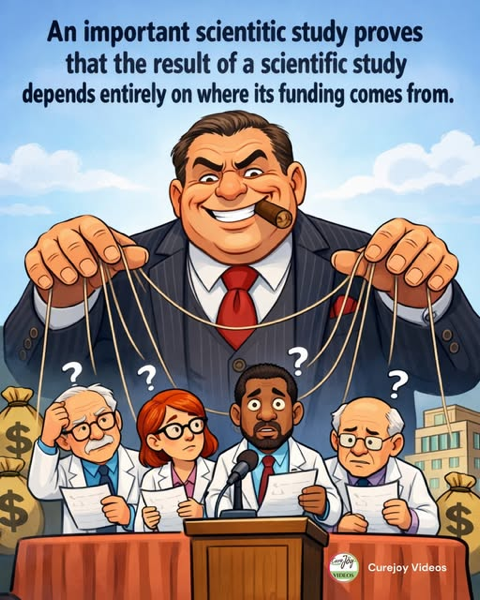
The integrity of scientific research has been undermined by neo-liberal ideology and free market zealots.
“User pays, user says” has taken on a new meaning in scientific research, as scientists found under the ideology prevailing, that they have to seek clients and contracts to find work.
You could liken it to a solicitor defending a rapist, burglar, poacher or some other criminal court. The accused may be guilty but the solicitor despite being aware of this, has to understandably argue otherwise. No one can blame the solicitor. After all he our she is not going to bite the hand that is paying the fee.
Scientists to a considerable degree, have been put in the same boat as the solicitor.
Scientists once had some measure of independence in defining the direction of research, notwithstanding loyalty to their employer. Those who work in Crown Institutes now bid for funds for research on specific proposals. It involves frustrating weeks, indeed months, as scientists prepare submissions, valuable time that should have been spent in actual research. One scientist was quoted as saying it’s “a bureaucratic auction.”
If funding is not there, the harsh reality is there is much less job security. So the job of research becomes dependent on getting funds. Scientists now often compete with other scientists for funding.
Two Lots of Scientists
Previous to the free market competitive system and within government departments, there were scientists and scientists. Some compliant to the departmental dogma, others with principle.
Such is human nature, some would come up with results required by their employers thus falling into line with government department policy.
In yesteryears in the days of the New Zealand Forest Service, factual findings were sometimes not compatible with departmental policies because a few scientists held to truth and integrity.
Some scientists stood up to any departmental dictates. They did not compromise their integrity or in other words the integrity of science.
Back in the 1950s American Thane Riney worked for first the Forest Service then Internal Affairs,
Thane Riney came up against the ingrained policy of departments and the personnel who made careers from the deer menace myth. Some Internal Affairs departmental staff were openly hostile to Thane Riney and spent much time plotting Thane Riney’s downfall. It came to a head in an incompetence charge the bureaucrats brought to the Public Service commission, against Thane Riney.
It failed.
Prolific research
In eight years Thane Riney produced 25 published scientific reports, a high rate jealously regarded by his bureaucratic colleagues. In 1955 Riney transferred to the NZ Forest Service. In 1956 the Forest Service took over deer control.
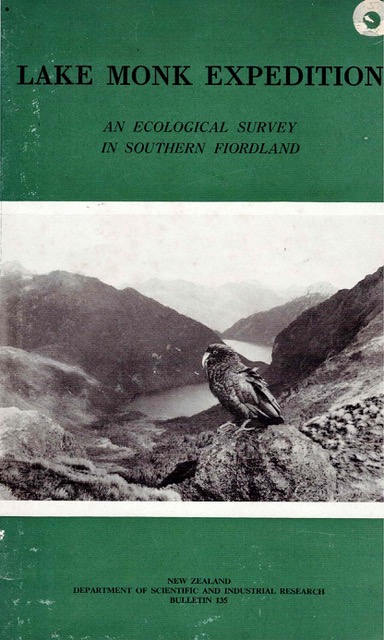
Thane Riney’s Lake Monk Fiordland study is a classic where he examined a deer population, virtually not hunted because of – in those days – its extreme isolation and remoteness. He and his team of researchers found that left alone, deer numbers naturally stabilised to a low level and did not explode out of control as departmental propaganda maintained.
Then a much less complex study showed there was no relationship between areas of erosion prone country and areas of highest deer numbers shot by cullers.
In the Forest Service the scientist found himself under attack with some bizarre accusations.
Tony Orman in his book “About Deer and Deerstalking” told of a Forest service conservator who dismissed Thane Riney’s research on the grounds that the American “wore size 12 boots and showed communist learnings.”
In 1958 Thane Riney frustrated with the bureaucracy and it’s baseless policies, left for Africa to do wildlife research.
World Famous
A protege of Thane Riney was Graeme Caughley who became a world renowned ecologist. Dr Caughley became frustrated with departmental dogma and left to work overseas, carving out an impressive career including at Australia’s CSIRO.
Woe betide any scientist who dared to step out of line.
In the mid-1990s a highly regarded entomologist Mike Mead examined the after-effects of 1080 of an aerial 1080 drop in Taranaki. Mike Meads research warned of long term detrimental consequences to the forest floor and decomposition of leaf litter. Within the Department of Conservation, Mile Meads was subjected to scorn, a shonky peer review of his study and made redundant.
Another colleague of Mike Meads, Peter Notman, suffered the same fate, for being honest.
Today scientists are increasingly commissioned by clients to carry out research, naturally in line with the client’s policy. “Paid science” it is called.
A scientist with his or her livelihood at stake and the chance of continuing business with the client, is likely to slant the research findings in favour of the client’s bias. It is simply a matter of not biting the hand that feeds out the money.
The fault is not so much the scientist’s but in the ideology, the system and politicians who following the free market ideology have undermined the integrity of science.
So there is science and there is psuedo-science..