
What Does a 3°C World Really Mean?
Post by Guest Author Dave Rhodes
Disclosure, whether you subscribe to the CO2-driven concept of Global Warming or not, the climate appears to be generally warming. Should that ever hit the predicted 3°C rise or not, what are the likely effects to New Zealand?
Rising seas are often presented as an unavoidable, uniform consequence of global warming. Headlines warn of metres of sea-level rise driven by Antarctic ice-sheet collapse, with coastal inundation framed as inevitable and near-term. But for New Zealand - perched astride active plate boundaries - the reality is more complex, more local, and less uniform than global narratives suggest.
For organisations such as Council of Outdoor Recreation Associations of New Zealand, understanding that complexity matters. Our coastlines, estuaries, harbours, and low-lying recreation areas are central to many outdoor activities - but so too is an evidence-based view of risk.
What does a 3°C rise actually imply?
A global temperature rise of around 3°C above pre-industrial levels is widely regarded as a high-impact scenario. Under such warming, global mean sea level is expected to continue rising for centuries due to thermal expansion of the oceans and melting of land ice.
However, even under pessimistic projections, most sea-level rise this century is measured in tens of centimetres, not metres. Large Antarctic ice-sheet collapse - the kind that raises seas by several metres - is a long-term risk over centuries, not something that suddenly transforms coastlines within a few decades.
This distinction is often lost in public debate.
Global sea level is not local sea level
Sea-level rise is not evenly distributed. Ocean currents, gravitational effects, and wind patterns all matter. More importantly for New Zealand, the land itself is moving.
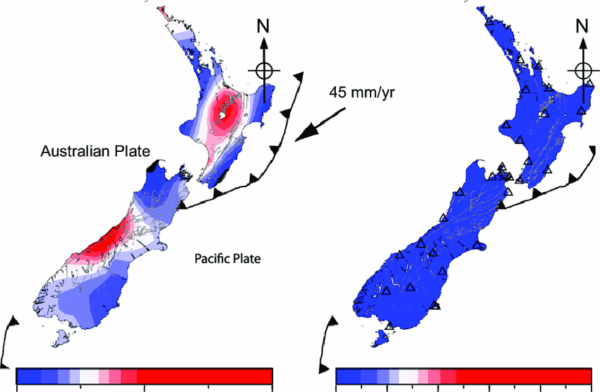
New Zealand sits on the boundary between the Australian and Pacific plates. As a result:
- Some coastlines are rising (tectonic uplift)
- Others are sinking (subsidence)
- Many alternate between the two over time, often abruptly after earthquakes
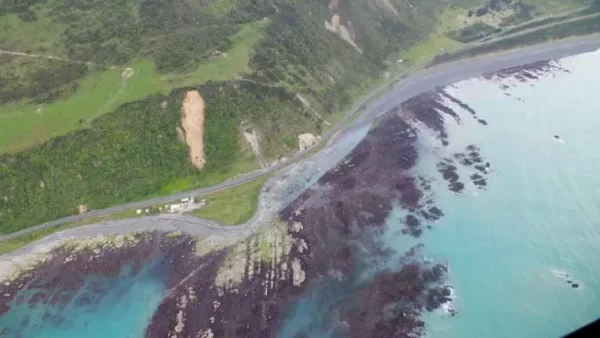
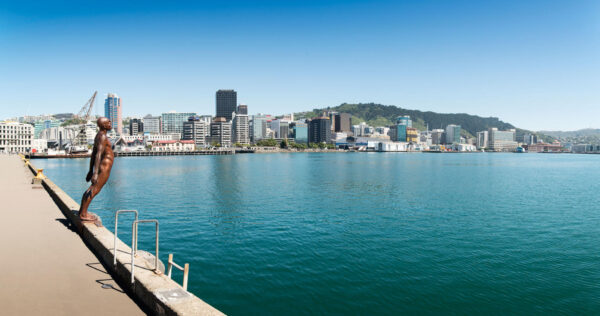
The 2016 Kaikōura earthquake famously lifted parts of the coastline by more than a metre in minutes - instantly offsetting decades of global sea-level rise in those areas. Meanwhile, parts of Wellington, Hawke’s Bay, and Southland are subsiding slowly, increasing local exposure regardless of global averages.
For any given stretch of coast, relative sea level (sea level relative to the land) matters far more than global means.
Environmental impacts: gradual change, not sudden loss
A warmer climate and modest sea-level rise do have real environmental consequences:
- Increased coastal erosion in exposed areas
- Saltwater intrusion into estuaries and wetlands
- Changes in sedimentation patterns affecting shellfish beds and nursery habitats
But these changes are typically incremental, interacting with storms, land use, and human structures. In many places, poor coastal planning and hard engineering solutions have a far greater immediate impact on ecosystems than sea-level rise itself.
For outdoor recreation, this means change - not disappearance.
The risk of oversimplified narratives
When all coastal change is attributed to climate-driven sea-level rise, other critical factors are overlooked:
- Catchment degradation and sediment runoff
- Coastal armouring that accelerates erosion elsewhere
- Loss of natural buffers like dunes and wetlands
- Poorly planned retreat or access restrictions
There is also a risk that alarmist framing leads to pre-emptive loss of access, with recreational users excluded “just in case”, long before genuine hazards materialise.
A New Zealand-specific approach is essential
For New Zealand, sensible responses should be:
- Locally grounded, recognising uplift and subsidence patterns
- Evidence-based, distinguishing near-term risks from long-term possibilities
- Adaptive, not locked into worst-case assumptions
- Protective of public access, unless risk is clearly demonstrated
Climate change is real, and sea levels are rising globally. But New Zealand’s coast is not passively drowning beneath a uniform ocean. It is dynamic, shifting, and highly variable.
Final thought
A 3°C world poses serious challenges - but it does not justify abandoning nuance. For recreationists, communities, and policymakers alike, the question is not whether change is coming, but whether we respond with clarity or with fear.
Understanding how global processes intersect with local geology is the difference between resilience - and unnecessary retreat.
But 3°C is along way away!
A global temperature rise of around 3°C while it is commonly linked to a doubling of atmospheric carbon dioxide (CO₂) from pre-industrial levels would take a long time to reach. Before large-scale fossil fuel use, CO₂ concentrations were about 280 parts per million (ppm). A doubling would therefore be around 560 ppm.
Importantly, the climate system does not respond instantly. Oceans absorb heat slowly, and ice sheets adjust over centuries. Even if CO₂ were stabilised at 560 ppm, it would likely take many decades to centuries for the full 3°C of warming to be realised. This lag is why observed warming today (~1.2–1.3°C) is lower than the eventual equilibrium response to current greenhouse gas levels.
At present, global CO₂ concentrations are about 420 ppm - roughly halfway to a doubling. If emissions continue at current rates, reaching 560 ppm would likely take several more decades, not years. Faster warming scenarios usually assume either much higher concentrations (often 700–800 ppm CO₂-equivalent, including other greenhouse gases) or long timeframes that allow the climate system to fully respond.
In practical terms, a 3°C world is not an abrupt threshold. It reflects a gradual accumulation of greenhouse gases and slow physical responses, with impacts unfolding unevenly across regions and over time - particularly for complex systems such as sea level, ice sheets, and coastlines.
Ever heard of St Bathan’s and its geological past? Fossils found at St Bathan’s show a subtropical past existed in Central Otago millions off years ago, with a warm, wet environment and Lake Manuherikia supporting varied life, including crocodiles, turtles, giant bats, unique birds (like early kiwis and parrots), geckos, and fish, unlike today’s cooler climate. “These 16-19 million-year-old fossils show subtropical rainforests and grassy patches, a far cry from modern NZ, demonstrating a warmer epoch before global cooling led to extinctions.”
It is interesting to see reference in Dave Rhode’s article to fear when he writes “the question is not whether change is coming, but whether we respond with clarity or with fear.” Fear is a card, politicians have played for a very long time.
About a century ago (1920s) American H.L. Mencken, known as the “Sage of Baltimore” is regarded by many as one of the most influential American journalists, essayists, and writers of the early 20th century, wrote “The whole aim of practical politics is to keep the populace alarmed (and hence clamorous to be led to safety) by an endless series of hobgoblins, most of them imaginary.”
What is needed is clarity of thought. I have asked in published articles as to the amount and direction of natural climate change and the amount and direction of man-made climate change.
No one has given me an answer.
Until those are defined, I cannot make a judgement.
I am aware that in a local river, the Wairau valley, a glacier once flowed halfway to the sea, I think it was 8,000 years ago. So the climate naturally cooled to allow that glacier. Today there is no glacier in the Wairau Valley although the old terminal moraine can be seen.
Because there is no glacier present now, the climate must have naturally warmed and the glacier retreated to become non-existent.
The key word is “naturally.”
IF we decide that humankind is worth saving (some doubt it) then we still have to be aware of our contribution (methane, CO2, etc.) and accept that we have to change how we operate. Most youth accept that; however the world’s major powers are governed by old men in their 70s and 80s (and their sycophantic disciples) who grew up in a world that imprinted the need for economic growth at any cost in their cranial material. Surely things are destined to get worse over the second quarter of this century?
I’m sure Reki is generalising when he refers to old men in their 70s and 80s because here’s something from a mature 80+ male.
Reki has got to the heart of the issue when he talks of the obsession for “economic growth at any cost.”
The guts of the problem is neo-liberal economics (i.e. economic growth at any cost) with GDP based on material statistics like car and colour tv sales, the God to obsessively worship.
GDP ignores aspects like quality of life and environmental values.
There is another way. Read UK Oxford economist Kate Raworth’s excellent book “Doughnut Economics” which advocates a humanitarian well-being approach.
Neo-liberal economics goes hand in hand with corporatism.
Economically it fails – look at the debt of countries even NZ.
Environmentally and in well-being terms, it’s a disaster.
It’s about madcap exploitation of finite natural resources.
If climate change and global warming are caused by our use of fossil fuels to produce energy WHY ARE WE CONSUMING SO MUCH OF THIS ENERGY?
Most of this energy is produced to enable the production and use of modern consumer products and services.
Do we really need (and can we even afford) so many products and services?
Is our modern culture of excessive consumption, disposal and replacement of products beneficial or detrimental?
Is our current economic model, that is dependent upon the continually increasing exploitation of natural resources, production and consumption of more products and services, planned obsolescence and disposal and replacement of things that are still useful, really rational?
Yes, this consumer economy and culture does enable a minority of people to become filthy stinking rich at the expense of the rest, who can no longer afford to own real assets of enduring value. Good for them. Bad for the rest of us.
Does anyone understand the definition of “conservation”?
Mine is “prevention of the waste of resources”.
Consumerism is promotion and celebration of the waste of resources, so that more people will be manipulated to constantly desire more goods and services they do not need and cannot afford to pay for.
All of this extravagance and destruction of people’s lives and the ecosystems of our planet is enabled by the creation and lending of more and more FIAT CURRENCY that we mistakenly accept as real MONEY.
This currency we earn, borrow and exchange for stuff we do not need is CREATED FROM NOTHING.
It is as fake as Monopoly Money.
It is created to enable some “players” to own all the real assets in the game of Monopoly and the western civilization we live in.
Productive working people exchange their real time and labour for this fake money.
They spend it and borrow more to buy stuff that they do not need, that will be disposed of and replaced by new stuff they do not need and cannot afford.
The owners of the means of production of this stuff get the fake money and use it to buy the real assets that have enduring value and become richer.
The productive workers have to sell more of their current and future time and labour to buy more new stuff and also service and repay the debt they have incurred.
Eventually, in this Monopoly game called the economy, a few people own almost everything with real value and the rest have almost nothing but personal and collective debt.
The productive resources of working people’s time and labour (aka LIVES) are wasted just as the natural resources of the planet are because people do not understand the definition of conservation.
Real money has two functions.
It is used to exchange for goods and services but it must also store the value of the time and labour people sold to earn it.
A real dollar earned today would purchase the same amount of something real 10 years from now. Fiat currency does not.
The fiat currency people acceptor as money is intended to constantly erode the value of workers time and labour and has done so since the 1970’s.
The acceptance of this fiat currency as money also enabled more natural resources to be plundered and wasted, including the fossil fuels that produce the required energy, to keep the corrupt game of Monopoly going.
There are 2 classes of people who have won the game.
1% are called the “Have almost everything Oligarchs”.
9% are called the “Have LOTS social, economic and political upper class”
The other 90% are either “Have some” or “Have NOT’s” because they are losers in a game they do not understand or even know they are playing.
Solution? STOP PLAYING the CROOKED game you are losing!
1. Stop accepting that fiat currency is real money. It is fake.
2. Stop borrowing the fake money and selling your future time and labour for nothing, unless it is to buy real assets with enduring value.
3. Go back to holding and using cash because that reduces impulse buying and helps conserve the value of your time and labour.
4. Demand SOMETHING REAL in return for time and labour. like Gold, Silver or payment for the costs of living and saving something for the future, so that the real value of wages and salaries does not keep decreasing as it has and continues to decrease.
5. Understand that what the people we call “the government” borrow and spend has to be serviced and repaid by the time and labour of real productive working people who do not earn enough to pay for it.
Stop supporting and electing politicians who solicit our votes by promising to spend more than we can afford.
They are only working for the minority of people that already HAVE LOTS and want to have EVEN MORE.
If enough people do these sensible things for themselves and one another it will also reduce the excessive consumption and waste of resources that is destroying their lives and futures as well as the lovely planet we are so fortunate to live on.
FOOLS AND THEIR MONEY ARE SOON PARTED.
People who sell their time and labour (lives) for fiat currency created from nothing are FOOLS,
STOP BEING SO FOOLISH because it is very detrimental to our futures, the future of our species and also that of our precious planet.