
Opinion by Garrick Batten
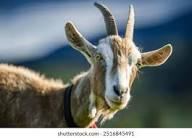
Is a goat worth more dead than alive?
The Department of Conservation (DoC), the NZ Deerstalkers Association, Hunting and Fishing NZ and the Firearm Safety Authority have recently bragged about killing 13,000 goats during the National Wild Goat Hunting competition. Last year, DoC’s goat control operations covered 1.7 m ha to help save the forest. Each bullet costs about $2. DOC paid a bounty for tails.
But there’s a better way to kill goats. Through existing meat processing plants.
Strangely, Federated Farmers joined the National goat hunt. Yet, their hill-country members need more income from using the grass they grow and currently waste. Farmed goats will help.
The processing plants they need are closing down due to a lack of heads to chop off. Their cooperatives are failing, and the planning and servicing of their stock slaughter systems are suffering. Sheep numbers keep shrinking, but meat processing capacity less so. In the past, many plants have adapted to handling and processing a wide range of goat ages, sizes and colours into carcasses and even boxed cuts. But they haven’t taken advantage of market opportunities, preferring to downgrade goat slaughter and spot trade meat sales.
Not like Australia. Last year it exported 55,000 tons of gloat meat to earn A$364 m. You have to ask the question why their schedule is 40% higher than ours. Is the answer that they prioritise beef and goat over lamb?
DOC tried an exercise to capture wild deer and process them, but it did not work out. Yet several contract musters have harvested wild goats for years and still are. Those goats can be slaughtered or sold for farming. In general terms, we are now eating nearly as much goat meat in NZ as we export from the 100,000 goats killed each year.
Much of that meat is eaten by the 300,000 Indian diaspora. It is as important as dairy in our recent Indian Free Trade Agreement, so both are specifically excluded. Another lost opportunity or a negotiating tactic?
Maybe DOC should rethink its feral goat control strategy. It seems a pity to waste all that protein. It’s meat that’s eaten by more people in the world, and especially by poorer, struggling consumers worldwide.
Like ethnic people in the USA, which imports half its annual needs and pay US$190 each at live auction for good-store-condition 20 kg LW goats and US$35 per kg at retail for ground goat meat.
Beef&LambNZ should rethink its refusal to endorse adding farm goats to hill country farms. They are a cheaper livestock alternative for their members to invest in. A cheaper animal to feed and farm when managed correctly. Biological weed control. And add to bottom-line profits because they have lower labour and husbandry costs.
Enterprising farmers, instead of wanting to shoot feral goats, could take advantage of the ASB’s Every Hectare Matters rural lending programme to improve productivity and resilience by farming them.
Because farmed goats can do that.
I seem to recollect a few decades ago now, a young farmer of the year award went to a young chap who purchased worthless gorse hill country for a pittance. Started farming goats who naturally dealt to the gorse and over the course of a decade converted much of the worthless land into prime pasture.
Wish I could remember his name!
The ‘pest’ phobia colours many New Zealanders’ thinking. Goats have to be a resource, marketable in NZ too, with the increasing diversity of people, such as Indians.
Garrick batten’s comments make much practical, logical and economic sense.
The pest phobia and the attendant culture of pests means valuable protein is wasted to be devoured by any wild pigs that might be around.
I agree totally with Garrick Batten’s opinion article and Jack Tuhawaiki’s comments Generally the whole prevailing culture of regarding any wild animal as a pest is wrong.
Possum is a prime example; the fur is worth 20 times the price of crossbred wool which is fetching a heady $5 kg. The meat is valuable for human or pet food consumption.
I wrote about it in my book “About Deer and Deerstalking” that the word “pest” should be replaced by “resource”.
Replace the often used word “control” with “management.” Replace “kill” with “harvest”.
“It’s simply a matter of constructive attitude instead of a mindless, unscientific dogma stereo-typing all wild animals, a doctrine that was spawned in 1930 at the infamous Deer Menace Conference.” (“About Deer and Deerstalking”. Published 2002.)
Great stuff!
Wild animals deserve respect just as farmed animals do. “We don’t own the planet Earth, we belong to it. And we must share it with our wildlife.”said Steve Irwin, renowned Australian wildlife expert and conservationist.
Treat them with respect and not a creature to be hated with extermination attempts by cruel slow-to-kill poisons. Garrick Batten’s fine article shows how wasteful and wrong the current culture is.
I note in article, “DOC tried an exercise to capture wild deer and process them, but it did not work out. Yet several contract musters have harvested wild goats for years and still are—Maybe DOC should rethink its feral goat control strategy. It seems a pity to waste all that protein. It’s meat that’s eaten by more people in the world, and especially by poorer, struggling consumers worldwide. ”
Is DOC capable of “rethinking”?
What a hopeless department DOC has been. Why does any government allow them to continue in their inept, often incompetent way without a complete overhauil happening?
I totally agree with Tony Ormans comments about labelling a viable commodity as a pest, goat meat is one of the most consumed meat globally, all these animals have a value,
Let’s reflect back to the rabbit board days, it worked until the hungry farmers though that Mixomatosis was the cheapest way to deal with control, that resulted in out of control, and Mixomatosis was illegal in NZ, but some how found its way onto South Island property’s,
These resources could mean employment, especially in our rural communities
I am with Garrick all the way. For years I culled goats and only used them as dog tucker. In recent years (in my dotage) I have been getting wild goat meat from Premium Game Meats; great stuff – not quite as good as Tahr but the shanks beat lamb in my book..
With the new FTA with India > Curried Goat for Export! Needs thinking about?